Hamhŭng, North Korea
- 559,056 people
- 2 places to visit
- 39.9838, 127.6125
Places to Visit (2)
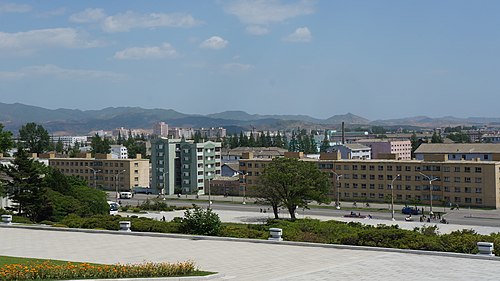
Hamhŭng is the second-largest city in North Korea, located in the southeastern part of the country along the coast of the Sea of Japan (known in North Korea as the East Sea). It serves as the capital of South Hamgyong Province and has historical significance dating back to the Koryo Dynasty (918–1392), when it was situated on an important trade route. The city features notable landmarks, including the Hamhŭng Grand Theatre and several cultural sites that reflect its rich history and cultural heritage. Hamhŭng has a population of approximately 700,000 residents, making it an important urban center in North Korea.
Economically, Hamhŭng is recognized for its industrial activities, particularly in the production of textiles, food processing, and light machinery. The city hosts a variety of factories and is a vital hub for agricultural activities in the surrounding region, noted for its fertile plains conducive to rice and other crop production. Additionally, Hamhŭng is the site of the Hamhŭng Chemical Complex, a significant establishment in the country's industrial base. Transportation infrastructure in the city includes railways and roads that connect it to other parts of the country, facilitating trade and movement. Despite challenges such as limited access to international markets and the impact of economic sanctions on North Korea, Hamhŭng remains a key player in the nation’s socio-economic landscape, exhibiting a blend of historical significance and modern industrial capability.
Facts about Hamhŭng
- Hamhŭng is the second-largest city in North Korea, after the capital, Pyongyang.
- It is known for being an industrial hub, particularly in the production of fertilizers and textiles.
- Hamhŭng is home to the Hamhŭng Revolutionary Site, which commemorates significant events related to the Korean War and the revolution.
- The city has a rich cultural heritage, featuring the Hamhŭng Grand Theatre, one of the largest theaters in North Korea.
- Hamhŭng played a pivotal role during the Korean War as it was heavily bombed and subsequently rebuilt, showcasing the resilience of its people.
- The city hosts the Hamhŭng International Seafood Festival, celebrating its coastal location and seafood industry.
- Hamhŭng has unique architectural styles, with many buildings reflecting a mix of Soviet and traditional Korean influences.
- The oldest university in North Korea, Hamhŭng University of Medicine, is located in this city, specializing in medical education and research.
- Hamhŭng is famous for its local delicacy, 'Hamhŭng cold noodles,' considered one of the regional cuisines of North Korea.
- The city is situated near the picturesque Kumgang Mountains, offering opportunities for outdoor activities and tourism, which is less common in other parts of the country.