Hangzhou, China
- 9,236,032 people
- 12 places to visit
- 30.2741, 120.1552
Places to Visit (12)
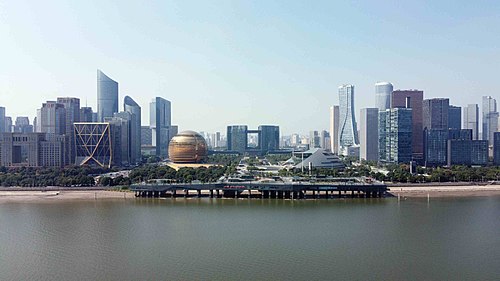
Hangzhou, the capital of Zhejiang province in eastern China, is a city renowned for its rich history, cultural significance, and picturesque natural landscapes. Located at the southern end of the Grand Canal, Hangzhou has played a vital role in China's economic and cultural development for over a thousand years. It is perhaps best known for West Lake, a UNESCO World Heritage site that has inspired poets, artists, and travelers for centuries. The scenic beauty of West Lake, with its serene waters, charming islands, and historical temples, attracts millions of visitors annually. Hangzhou is also famous for its tea, particularly Longjing tea, which is celebrated for its quality and flavor and is produced in the nearby hills.
In recent decades, Hangzhou has emerged as a significant technological and economic hub in China. It is often referred to as a "paradise on earth" for its blend of modern development and ancient traditions. The city is home to Alibaba Group, one of the largest e-commerce companies in the world, which has transformed Hangzhou into a center for innovation and entrepreneurship. Moreover, the city has invested heavily in infrastructure, including an extensive public transport system and improved connectivity, which facilitates trade and tourism. Hangzhou also hosts numerous international conferences and events, further asserting its status as a global city. Its blend of cultural heritage, stunning natural beauty, and modern advancements makes Hangzhou a quintessential representation of China's rapid urbanization while retaining its historical charm.
Facts about Hangzhou
- Hangzhou is famous for its West Lake (Xi Hu), a UNESCO World Heritage site known for its scenic beauty and cultural significance, featuring pagodas, temples, and beautiful gardens.
- Historical records indicate that Hangzhou was the southern capital of the Song Dynasty (960-1279), making it one of China's most historically significant cities.
- The city is renowned for its silk production, playing a crucial role in the silk trade along the ancient Silk Road, which has earned it the nickname 'Silk Capital of China.'
- Hangzhou is known for its tea culture, particularly the Longjing (Dragon Well) tea, which is considered one of the finest green teas in China and is grown in the surrounding hills.
- The city boasts the world's largest open-air market for traditional Chinese medicine, highlighting its long-standing practices in herbal medicine and wellness.
- In recent years, Hangzhou has gained international recognition as a hub for e-commerce and technology, being the headquarters of Alibaba, one of the world's largest online marketplaces.
- Hangzhou hosted the G20 summit in 2016, marking it as a significant location for global economic discussions and showcasing its modern development.
- The city features the beautiful Liuhe Pagoda, a historic octagonal pagoda dating back to the Song Dynasty, which has become a symbol of Hangzhou.
- Hangzhou is one of the most popular tourist destinations in China, often praised for its picturesque landscapes and the harmonious blend of nature and urban life.
- The Grand Canal, which runs through Hangzhou, is the longest man-made waterway in the world and was vital for trade and transportation during ancient times.