Hannover, Germany
- 515,140 people
- 20 places to visit
- 52.3759, 9.732
Places to Visit (20)
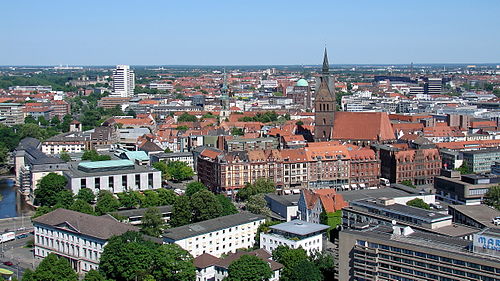
Hannover, the capital of Lower Saxony in northern Germany, is a city known for its rich history, vibrant culture, and significant economic role in the region. Established as a fortified town in the Middle Ages, Hannover grew in prominence in the 17th and 18th centuries as a center of the Electorate of Hanover, which later became the Kingdom of Hanover. The city played an essential role in European politics, particularly when the elector became King George I of Britain in 1714, linking it closely to British history. Today, Hanover reflects this historical significance through its diverse architecture, which ranges from medieval buildings like the Marktkirche to the grand Herrenhausen Gardens, renowned for their Baroque layout.
Modern Hannover is also recognized for its strong economy and innovation. The city hosts several trade fairs, including the Hannover Messe, one of the world's largest industrial fairs, which attracts businesses and visitors globally, showcasing technological advances and networking opportunities. Hannover's infrastructure is robust, featuring excellent transport links including the Hannover Hauptbahnhof, a major railway station connecting the city to domestic and international destinations. The city is also home to a number of educational institutions, such as the University of Hannover, which contributes to its dynamic workforce and research output. Furthermore, Hannover is celebrated for its green spaces, with numerous parks and gardens that provide residents and visitors with leisure opportunities, enhancing the quality of life in the urban environment. The city's unique blend of historical and modern elements, along with a focus on innovation, makes Hannover a significant player in Germany’s cultural and economic landscape.
Facts about Hannover
- Hannover is home to the largest exhibition grounds in the world, the Hannover Messe, which hosts numerous international trade fairs each year, including the famous CeBIT technology fair.
- The Herrenhausen Gardens in Hannover are a remarkable example of Baroque landscaping and are recognized as one of the finest gardens in Europe, attracting visitors from around the globe.
- Hannover is the birthplace of the world-renowned automobile manufacturer, Volkswagen, which has a significant presence in the region and operates its largest manufacturing plant in the nearby town of Wolfsburg.
- In 1949, Hannover became the seat of the newly founded German Football Association (DFB), underscoring the city’s importance in the history of German sports.
- The Lower Saxony State Museum in Hannover is notable for its unique combination of art, culture, and natural history, housing one of Germany's largest collections of ethnological artifacts.
- Hannover has a unique tradition of celebrating 'Wishing Lanterns' during the Sankt Martin festival, where thousands of children release lanterns into the sky, creating a magical atmosphere.
- The city was significantly rebuilt after World War II, which gives it a unique architectural landscape that blends modernist styles with reconstructed historical buildings.
- Hannover hosts the annual Maschsee Lake Festival, which attracts up to 2 million visitors each summer for its cultural events, food stalls, and water activities, making it one of the largest festivals in the region.
- The Nanas, vibrant sculptures created by artist Niky de Saint Phalle, can be found in various public spaces across Hannover, adding a unique artistic flair to the city’s environment.
- Hannover is known for its strong economic ties to the technology and research sectors, with institutions like the Hanover University of Technology (TU Hannover) leading innovation in engineering and applied sciences.