Haridwar, India
- 186,079 people
- 17 places to visit
- 29.9457, 78.1642
Places to Visit (17)
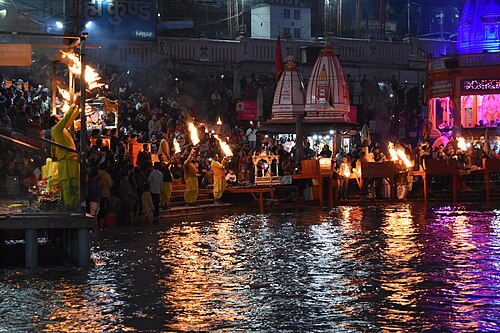
Haridwar is a prominent city located in the northern Indian state of Uttarakhand, positioned where the Ganges River emerges from the Himalayan foothills. An important pilgrimage destination, Haridwar's name translates to "Gateway to God," reflecting its significance in Hindu spirituality. The city is renowned for its sacred ghats, particularly Har Ki Pauri, a famous ghat where pilgrims gather for rituals and ceremonies. Haridwar is is considered one of the seven holiest places in Hinduism and attracts millions of devotees and visitors annually, especially during the Kumbh Mela, which occurs every twelve years and is one of the largest religious gatherings in the world.
The city's rich cultural heritage is characterized by numerous temples, ashrams, and festivals. Key religious sites include the Mansa Devi Temple and Chandi Devi Temple, which are perched on hilltops and accessible via cable car. The Ganga Aarti, a daily ritual performed at Har Ki Pauri, showcases the reverence of the local people for the Ganges River, with the lighting of lamps and chanting of mantras creating a mesmerizing atmosphere. In addition to its spiritual allure, Haridwar has a vibrant marketplace offering local handicrafts, incense, and traditional Ayurvedic remedies, making it a bustling hub of commerce and culture. The city's natural beauty, with its surrounding hills and the flowing Ganges, further enhances its appeal, creating a serene ambiance for both pilgrims and tourists.
Haridwar also serves as a base for visitors seeking to explore nearby attractions, including Rishikesh, known for its yoga and adventure sports, and various trekking routes in the Himalayas. The city's infrastructure supports its role as a pilgrimage center, with accommodations ranging from budget guesthouses to upscale hotels. The festivals of Navratri and Diwali attract large crowds, showcasing the cultural vibrancy of the region. Overall, Haridwar stands as a unique intersection of spirituality, culture, and natural beauty, making it a significant destination in India's religious and tourism landscape.
Facts about Haridwar
- Haridwar is one of the seven holiest places (Saptapuri) in Hinduism, making it a significant pilgrimage site for millions of devotees.
- The city is situated at the foothills of the Himalayas and is known for the Ganges River, where it is believed that the river's waters are particularly purifying.
- Haridwar hosts the Kumbh Mela, one of the largest religious gatherings in the world, attracting millions of pilgrims every 12 years.
- The iconic Ganga Aarti ceremony, held daily at Har Ki Pauri, draws large crowds who come to witness the spiritual and mesmerizing ritual.
- Haridwar's name translates to 'Gateway to God', which reflects its spiritual significance and its role as a starting point for the Char Dham Yatra.
- The city is home to ancient temples, including Mansa Devi Temple and Chandi Devi Temple, both of which are situated on hilltops and are accessible by cable car.
- Haridwar has a rich history, with references in ancient scriptures like the 'Puranas' and texts such as the 'Mahabharata'.
- Unlike many other towns in India, Haridwar maintains a unique blend of spirituality, natural beauty, and vibrant local culture.
- The city has been recognized as a sustainable tourism destination, encouraging eco-friendly practices and responsible pilgrimage tourism.
- Haridwar is also a popular center for yoga and Ayurveda, attracting practitioners and tourists seeking spiritual and physical wellness.