Harrisburg PA, United States
- 49,081 people
- 19 places to visit
- 40.2732, -76.8867
Places to Visit (19)
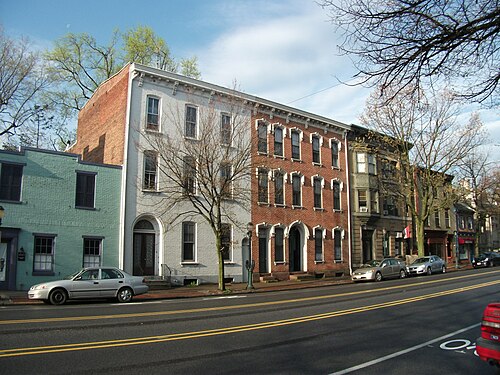
Harrisburg, the capital city of Pennsylvania, is situated along the eastern bank of the Susquehanna River and serves as the county seat of Dauphin County. Founded in 1785, Harrisburg has a rich history that reflects its development as a significant transportation hub due to its strategic location. It played a vital role during the Industrial Revolution, with the establishment of various industries, including railroad construction, which further solidified its status as a commercial center. The city's selection as the state capital in 1812 marked a transformative period, leading to the construction of key governmental buildings, including the Pennsylvania State Capitol, known for its stunning Renaissance-style architecture and impressive dome.
Harrisburg has a diverse cultural scene, highlighted by museums, art galleries, and theaters, contributing to its vibrant community life. The Pennsylvania State Museum showcases the state’s artifacts, while the Whitaker Center for Science and the Arts offers interactive exhibits and plays. Numerous festivals throughout the year, such as the Kipona Festival celebrating the city’s history with food, music, and arts, attract visitors and foster local pride. The city also features parks and green spaces, such as Riverfront Park, which extends along the Susquehanna River, providing opportunities for outdoor recreation and scenic views.
In terms of demographics, Harrisburg is a small city with an estimated population of around 50,000 residents and a rich tapestry of ethnic diversity. The economy is supported by a mix of government, healthcare, and education sectors, with several colleges and universities in the area that contribute to the local workforce. While Harrisburg has faced challenges such as economic fluctuations and population decline in the past, it has seen revitalization efforts in recent years that focus on urban renewal, improved infrastructure, and community engagement. With its historical significance, thriving arts scene, and ongoing development, Harrisburg continues to be a city of regional importance in Pennsylvania, balancing its rich past with aspirations for a dynamic future.
Facts about Harrisburg
- Harrisburg is the capital of Pennsylvania and serves as the political hub of the state, hosting important government institutions, including the Pennsylvania State Capitol building, which is known for its stunning architecture and artwork.
- The Harrisburg area is home to the National Civil War Museum, the largest museum in the country dedicated to preserving and interpreting the American Civil War from both the Union and Confederate perspectives.
- Harrisburg hosted the 1936 American Legion National Convention, where it was the first city to celebrate the 100th anniversary of the founding of the Legion, showcasing its historical significance to veteran affairs.
- The city is situated along the Susquehanna River and is known for the iconic Harrisburg Riverfront Park, which features recreational areas, walking trails, and views of the river and the city skyline.
- Harrisburg's Broad Street Market is one of the oldest continuously operating farmers' markets in the United States, established in 1860, and is a hub for local farmers and food producers.
- The city has a unique transportation history, being the site of the Harrisburg & Lancaster Railroad, one of the earliest railroads in the U.S., which established significant trade routes in the 19th century.
- Harrisburg is known for its vibrant arts scene, particularly highlighted by the annual Harrisburg ArtsFest, which showcases local artists, musicians, and performers, attracting thousands of visitors each year.
- The city played a crucial role in the Industrial Revolution, particularly in the production of iron and steel, with various factories that contributed to the steel industry in Pennsylvania.
- Harrisburg's historic district features many architectural styles, including Victorian, Romanesque, and Classical Revival, which distinguishes it from other cities with more homogeneous historical architectures.
- The annual Kipona Festival celebrates the city's riverfront with food, arts, and youth activities, emphasizing Harrisburg's community spirit and connection to the Susquehanna River.