Hashima, Japan
- 67,909 people
- 35.329, 136.6805
No places available for this city.
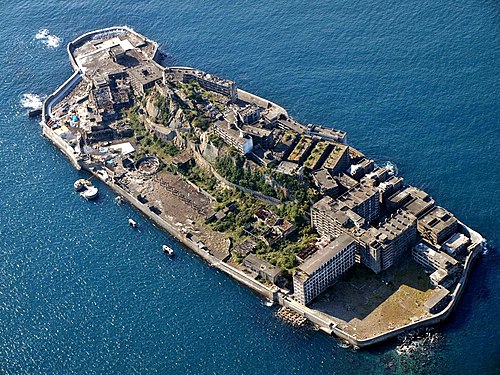
Hashima, also known as Gunkanjima or "Battleship Island," is a small, abandoned island located in the Nagasaki Prefecture of Japan. Situated roughly 15 kilometers (9.3 miles) from Nagasaki city, Hashima spans approximately 6.3 hectares (15.5 acres) and is recognized for its unique appearance, resembling a battleship when viewed from the sea. The island gained notoriety due to its extensive history as a coal mining facility, which was actively used from the late 19th century until the early 1970s. At its peak in the 1950s, Hashima was home to around 5,000 residents, making it one of the most densely populated places on Earth.
The rapid industrialization of Japan in the late 19th century led to the development of Hashima’s coal mines, initiated by the Mitsubishi corporation. The island featured robust infrastructure, including concrete apartment buildings, schools, and a hospital, which supported the thriving community of miners. However, as Japan transitioned from coal to petroleum in the 1960s, demand for coal dwindled, leading to the closure of the mines in 1974. Following the abandonment of the island, nature began to reclaim the structures, creating a haunting yet fascinating landscape of crumbling buildings and overgrown vegetation. In 2009, Hashima was designated a UNESCO World Heritage Site as part of the "Meiji Industrial Revolution: Iron and Steel, Shipbuilding and Coal Mining" due to its significant role in Japan's industrial history.
Today, Hashima is accessible to tourists who can explore its ruins through organized boat tours, which allow them to witness the remnants of its once-thriving community. The island has also become a subject of international interest, inspiring various forms of media, including films and documentaries that highlight its eerie ambiance and storied past. The juxtaposition of its industrial history and post-apocalyptic landscape serves as a reminder of the fleeting nature of human endeavor and the relentless power of the natural environment. Hashima continues to evoke curiosity and reflection on industrialization, cultural heritage, and the impacts of modernization in Japan.
Facts about Hashima
- Hashima, also known as Gunkanjima or Battleship Island, is famous for its distinctive silhouette that resembles a battleship, which has earned it its nickname.
- The island was once a thriving coal mining community, with its population peaking at over 5,200 people in the 1950s, making it one of the most densely populated places on Earth at that time.
- Hashima was completely abandoned in 1974 when the coal mines were closed, and it has since become an iconic symbol of Japan's rapid industrialization and subsequent decline.
- The island is home to well-preserved concrete buildings from the early 20th century, including residential blocks, a school, and a hospital, showcasing the industrial heritage of Japan.
- In 2015, Hashima was designated as a UNESCO World Heritage Site as part of the 'Sites of Japan’s Meiji Industrial Revolution', highlighting its historical significance.
- Access to Hashima is limited, with guided tours being the only way for visitors to explore the island, emphasizing its status as a relic of Japan's industrial past.
- The island has been featured in various films and media, including the James Bond movie 'Skyfall', which has contributed to its international recognition.
- Hashima's unique environment, with its crumbling buildings being overtaken by nature, has made it a popular subject for urban exploration and photography.
- The island's harsh living conditions due to limited resources and the isolation of being surrounded by the sea led to fascinating stories and lives of its former inhabitants.
- Despite its eerie atmosphere, Hashima attracts thousands of tourists each year who are interested in its history and status as a ghost town.