Hazebrouck, France
- 23,307 people
- 10 places to visit
- 50.7275, 2.5426
Places to Visit (10)
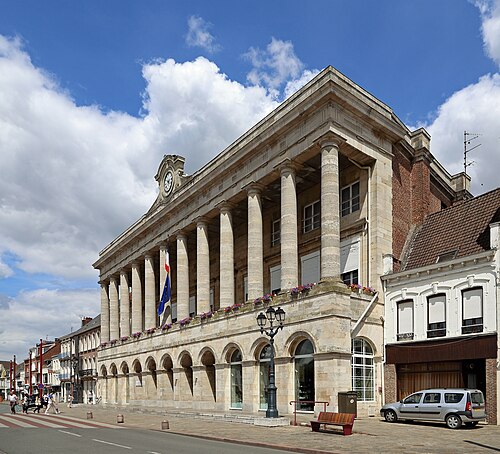
Hazebrouck is a commune located in the Nord department in the northern part of France. Situated approximately 30 kilometers southwest of Lille, it lies in the heart of the historical region of Flanders, an area rich in culture and history. The city has a population of around 20,000 residents and is known for its strategic location, which has historically made it a significant center of trade and transportation. The town is well-connected by road and rail, with the Hazebrouck railway station serving as a hub that links it to major cities in the region.
The history of Hazebrouck dates back to the medieval period, and it was formally established as a town in the 13th century. The city is known for its remarkable architectural heritage, including the Church of Saint-Étienne, a Gothic structure that dominates the town's skyline. Hazebrouck was also pivotal during both World Wars, as it served as a battleground and a refuge for displaced populations. Today, remnants of its historical past can still be seen in various public squares and buildings, which attract visitors interested in the region's rich heritage.
In addition to its historical significance, Hazebrouck is renowned for its vibrant local economy, characterized by agricultural production, manufacturing, and small enterprises. The region's fertile farmland supports a variety of crops, and the local market celebrates this agricultural bounty with numerous events throughout the year. Cultural festivities, such as the annual Fête de l'Ascension, further enhance the town's community spirit, showcasing local crafts, food, and music. Overall, Hazebrouck is a dynamic town that combines a rich historical narrative with a thriving, modern-day community.
Facts about Hazebrouck
- Hazebrouck is known for its unique position as the capital of the Flemish region in France, reflecting a mix of French and Flemish culture.
- The town is famous for its belfry, a UNESCO World Heritage site, which is a remarkable example of the architectural style that characterizes Flanders.
- Hazebrouck was historically significant during World War I and World War II, serving as a key strategic location for both the Allies and the Axis powers.
- The annual Fête de la Saint-Éloi pays homage to the town's traditional roots in agriculture and local craftsmanship, attracting visitors from surrounding areas.
- Hazebrouck hosts the 'Marché de Noël', a Christmas market that showcases local artisans and festive traditions, setting it apart from other towns.
- The town is home to the Église Saint-Éloi, an impressive Gothic church that dates back to the 14th century and features unique Flemish architecture.
- Hazebrouck has a rich agricultural heritage and is surrounded by lush farmland, making it an important hub for local agriculture and markets.
- The town's location makes it a gateway for cycling enthusiasts, with numerous bike paths that connect Hazebrouck to neighboring towns and the countryside.
- Hazebrouck has a vibrant local music scene and hosts various cultural events throughout the year, distinguishing it from many other smaller French towns.
- The town's history as a center for textiles in the 19th century has left a lasting legacy on its heritage and local economy.