Herāt, Afghanistan
- 574,300 people
- 7 places to visit
- 34.3529, 62.204
Places to Visit (7)
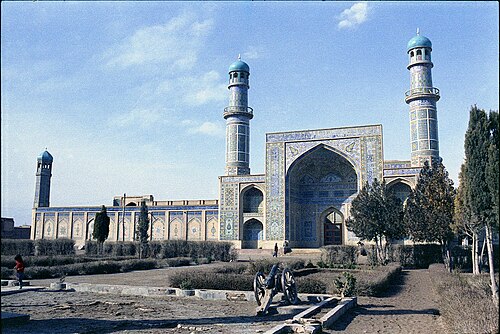
Herāt, one of Afghanistan's major cities, is located in the western part of the country, near the banks of the Hari River. It is the capital of Herāt Province and serves as an important cultural, economic, and political center. Historically, Herāt has been an important city on the Silk Road, facilitating trade between Central Asia and the Iranian plateau. The city is renowned for its rich history, which dates back to ancient times, and has been influenced by various empires, including the Persian Empire, Alexander the Great's Hellenistic Empire, and the Mongol Empire. This diverse historical background has contributed to Herāt's unique cultural tapestry, featuring a blend of Persian, Islamic, and Central Asian architectural styles.
Herāt is notable for its historical landmarks, including the majestic Herāt Citadel, also known as the Citadel of Alexander, which dates back to the 5th century. Other significant sites include the Friday Mosque (Masjid-i Jami), famed for its intricate tile work and impressive minarets, and the tomb of the renowned Persian poet Jami. The city has a population of approximately 500,000 residents, making it one of Afghanistan's largest urban centers. Its strategic location has made it a hub for commerce, agriculture, and education, with industries focusing on carpets, textiles, and food processing. Despite facing challenges such as conflict and economic instability, Herāt has remained resilient, showcasing a blend of traditional and modern influences in its daily life and culture. The city continues to reflect the complexities of Afghanistan's past and present while striving for a peaceful and prosperous future.
Facts about Herāt
- Herāt is known for its stunning historical architecture, including the ancient Citadel of Herat, which dates back to the 6th century BC and has been a pivotal fortification throughout history.
- The city has been an important center of Persian culture and literature, serving as a backdrop for many influential poets, including the renowned 15th-century poet Jami.
- Herāt's location along the ancient Silk Road made it a crucial trading hub, linking various cultures and facilitating commerce between the East and West.
- The Friday Mosque of Herāt, also known as the Masjid-i Jami, is a UNESCO World Heritage site and is famous for its intricate tile work and grand minarets, showcasing Islamic architecture in the region.
- Historically, Herāt was the capital of the Timurid Empire in the 15th century and is often referred to as the 'Pearl of Khorasan' due to its importance during this period.
- The city is known for its unique local craftsmanship, particularly in the production of carpets, pottery, and calligraphy, distinguishing it from other Afghan cities.
- Herāt has a diverse population, with ethnic groups including Tajiks, Hazaras, and Pashtuns, contributing to a rich cultural tapestry not commonly found in other Afghan cities.
- The region is famous for its rich agricultural land and is often referred to as the 'Garden of Herat' due to its production of fruits, nuts, and grains, which are exported to various parts of the country.
- Herāt has been home to several renowned historical figures, including the 14th-century Persian poet and philosopher, Omar Khayyam, further cementing its legacy in Persian literature.
- Unlike other cities in Afghanistan, Herāt has a relatively higher level of educational institutions and cultural activities, making it a center for learning and artistic expression.