Heze, China
- 1,346,717 people
- 6 places to visit
- 35.2336, 115.4812
Places to Visit (6)
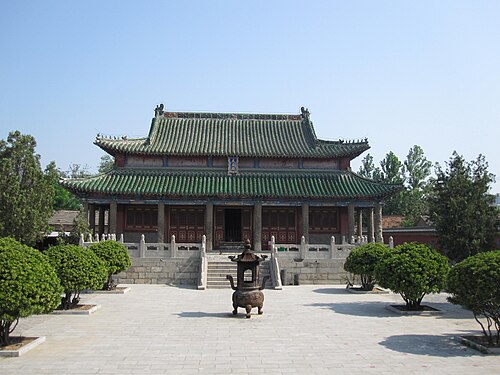
Heze is a city located in the southwestern part of Shandong Province, China. Known for its rich cultural heritage and agricultural significance, Heze is recognized as the "Peony Capital of the World" due to its historical association with the cultivation of peonies. The city has a population of over 800,000 residents and covers an area of approximately 7,000 square kilometers. Heze was officially designated as a city in 1994, despite its longstanding historical significance, with evidence of human activity in the region dating back to prehistoric times. The city’s history is notably marked by its links to the ancient state of Ju, which was a vital player in China’s Warring States period.
The economy of Heze is predominantly agrarian, relying heavily on agriculture due to its fertile plains and favorable climate. The region is a major producer of crops such as wheat, corn, and cotton. In addition to staples, Heze is famous for its high-quality peonies, and the annual Heze Peony Festival attracts tourists and horticulturists from around the globe, celebrating the city’s floral heritage and boosting local tourism. Industrial development has also gained momentum in recent years, with emphasis on textiles, machinery, and food processing. Efforts toward modernization and infrastructure improvement have bolstered economic growth, making Heze a growing hub in the region.
Culturally, Heze is home to various historical sites and landmarks, including ancient temples and parks. The city’s architectural style reflects a blend of traditional Chinese aesthetics and modern influences. Local crafts, especially those related to peony cultivation, are integral to Heze’s identity, and the region hosts numerous cultural events celebrating its traditions. The city forms part of the larger Shandong cultural landscape, characterized by its distinctive dialects, cuisine, and social customs. Overall, Heze stands as an emblem of agricultural prosperity and cultural richness within China, making it a unique and vibrant place to explore.
Facts about Heze
- Heze is known as the 'Home of Peonies,' hosting the annual Heze Peony Festival, which attracts visitors from around the world to witness its stunning flower displays.
- The city is famous for its strong historical roots, with ancient relics dating back to the Han and Tang Dynasties, highlighting its significance in Chinese history.
- Heze is the site of the popular Huaiyin Water Street, known for its picturesque waterways and traditional architecture, which provides a unique cultural experience distinct from many other cities.
- Heze is recognized for its contributions to Chinese opera, particularly the Heze Zhuang Opera, which is an important cultural heritage of the region.
- The city is home to the unique Peony Garden, which spans over 100 hectares and contains thousands of varieties of peonies, making it one of the largest peony gardens in the world.
- Heze boasts a significant number of bamboo forests, which are utilized in various local crafts, distinguishing it from many other urban areas known for their industrial landscapes.
- The local cuisine includes traditional dishes like Heze Tofu and various peony-flavored snacks, which are not commonly found in other parts of China.
- Heze has a notable historical figure, Gao Fenghan, a renowned painter from the Ming Dynasty, whose works have contributed to the country's artistic heritage.
- The city is strategically located at the junction of several major transport routes, making it an important logistics hub in Shandong Province, while many other cities do not share this advantage.
- Heze has several cultural festivals and events throughout the year that celebrate local customs, arts, and agriculture, giving it a distinct regional charm.