Hohhot, China
- 2,350,000 people
- 10 places to visit
- 40.8415, 111.752
Places to Visit (10)
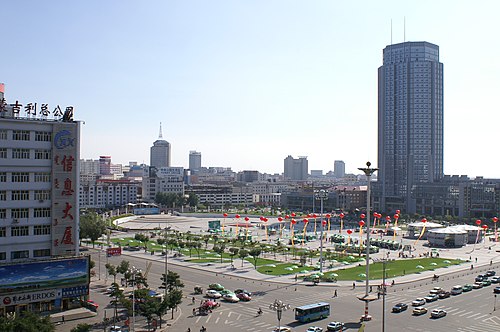
Hohhot, the capital city of Inner Mongolia Autonomous Region in northern China, serves as a significant political, economic, and cultural center. Founded in 1691, Hohhot is strategically located at the crossroads of the Mongolian and Chinese cultures. The city's name, which translates to "Blue City" in Mongolian, reflects its historical ties to the Mongolian ethnic group and their traditions. Over the years, Hohhot has transformed from a small military outpost into a vibrant urban center with a population of over 2.9 million. The city is characterized by its unique blend of Han Chinese and Mongolian influences, evident in its architecture, cuisine, and cultural practices.
Today, Hohhot is an important hub for trade and commerce, benefiting from its proximity to Mongolia and access to extensive transportation networks. The city features several key industries, including textiles, electronics, and food processing, contributing to its overall economic growth. Hohhot is also known for its educational institutions, particularly Inner Mongolia University, which attracts students from across the region and beyond. In terms of tourism, Hohhot offers a rich array of historical sites and attractions, including the Zhaojun Tomb, a memorial site for Wang Zhaojun, one of China's four great ancient beauties, and the Inner Mongolia Museum, which showcases the cultural heritage of the region.
Culturally, Hohhot celebrates its diverse ethnic makeup with numerous festivals, particularly the Naadam Festival, which features traditional Mongolian wrestling, horse racing, and archery. The city also hosts various markets and local cuisine that highlight both Mongolian and Han traditions, making it a culinary delight for visitors. With its harmonious blend of cultures, economic vibrancy, and rich history, Hohhot stands as a symbol of Inner Mongolia's unique identity and an important gateway between China and Mongolia. As urban development continues and infrastructure improves, Hohhot is poised to play an even greater role in regional integration and cultural exchange, making it an increasingly significant city in the broader context of northern China.
Facts about Hohhot
- Hohhot is the capital of the Inner Mongolia Autonomous Region, which is unique in China for its cultural integration of Mongolian and Han Chinese influences.
- The city is home to the Dazhao Temple, which is one of the oldest and most important Tibetan Buddhist temples in Inner Mongolia, built in the 16th century.
- Hohhot is noted for its extensive dairy industry, and it's often referred to as the 'Dairy Capital of China,' producing a significant percentage of the country's dairy products.
- The city hosts the Inner Mongolia Museum, which showcases the region's rich history, including its Mongolian heritage, dinosaur fossils, and artifacts from ancient Silk Road trade.
- Hohhot has unique modern architecture influenced by both traditional Mongolian designs and contemporary Chinese urban styles, creating a distinctive cityscape.
- In 2018, Hohhot was listed as one of the top 10 most livable cities in China, recognized for its quality of life and urban environment.
- The city is also known for its annual Hohhot International Youth Music Festival, which attracts young musicians from around the world, promoting cultural exchange.
- Hohhot was historically an important military and trade hub on the northern frontier, particularly during the Mongol Empire.
- The city is close to the famous Kublai Khan's secret palace in the Ordos region, linking it to the history of the Mongol Empire.
- Hohhot has a unique blend of urban and rural landscapes, featuring both modern residential districts and vast grasslands, reflecting its Mongolian nomadic heritage.