Hotan, China
- 408,894 people
- 3 places to visit
- 37.1118, 79.9132
Places to Visit (3)
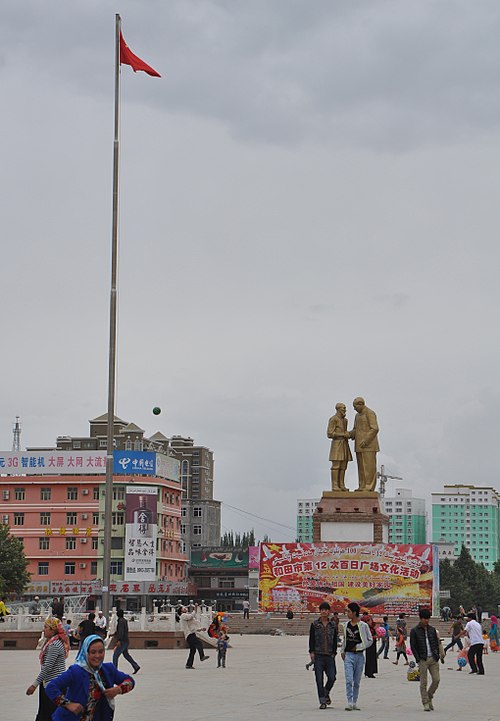
Hotan, located in the southern region of Xinjiang Uyghur Autonomous Region in China, is a city with a rich history and cultural significance. Nestled along the southern edge of the Taklamakan Desert, it serves as an important oasis town and a strategic stop on the ancient Silk Road, facilitating trade between the East and West. The region is primarily populated by the Uyghur ethnic group, which profoundly influences the local culture, language, and traditions. Historically, Hotan has been known for its jade production, silk weaving, and agricultural output, with mulberries and cotton being central to the local economy.
Modern Hotan is marked by its rapid development, reflecting China's broader economic initiatives. The city has witnessed significant infrastructure improvements, including the construction of roads, railways, and modern amenities aimed at boosting trade and tourism. While traditional markets remain a hallmark of the local economy, with merchants selling handcrafted goods and organic produce, there is an increasing presence of modern enterprises. Religious practices in Hotan are predominantly influenced by Islam, and the city is home to several mosques that exemplify the Islamic architectural style. Despite its modernization, Hotan retains a strong sense of cultural identity, with festivals and traditional events celebrating Uyghur heritage, music, and cuisine at the forefront of community life.
Hotan's unique geographical location and cultural mosaic not only make it a focal point for economic activities but also a significant site for tourism, attracting visitors with its historical sites, such as the Hotan Jade Market and its surrounding natural beauty. The city's blend of tradition and modernity, alongside its pivotal role in China's Silk Road revival strategy, positions it as a culturally rich destination within the expansive and diverse tapestry of China. Visitors to Hotan can expect to experience a vibrant community deeply rooted in its history while navigating the pathways of contemporary development.
Facts about Hotan
- Hotan, located in the Xinjiang Uyghur Autonomous Region, is renowned for its production of high-quality jade, often referred to as 'Hotan jade.'
- The city has a rich history as a key stop along the ancient Silk Road, facilitating trade between China and Central Asia for centuries.
- Hotan is home to the unique culture of the Uyghur ethnic group, which deeply influences the city's cuisine, music, and traditional clothing.
- The Hotan area is famous for its picturesque landscapes, including the Taklamakan Desert and the nearby Kunlun Mountains, making it a point of interest for nature enthusiasts.
- Hotan features the Hotan Museum, which showcases artifacts from its Silk Road history and exhibits about local Uyghur culture.
- The city is known for its traditional carpet weaving, producing unique designs and high-quality textiles that are sought after both locally and internationally.
- Hotan has several ancient Buddhist sites and ruins, including the Karakhoja Cemetery, which is believed to be one of the oldest burial sites in the region.
- The city's annual Hotan International Jade and Culture Festival celebrates local craftsmanship and attracts artisans and visitors from around the world.
- Hotan serves as a hub for agriculture, notably producing fruits like pomegranates and melons, benefiting from the region's favorable climate and irrigation from the nearby river systems.
- The Hotan marketplace is famous for its vibrant atmosphere, offering a wide array of local products, including fresh produce, traditional Uyghur dishes, and handmade goods.