Houghton-Le-Spring, United Kingdom
- 37,840 people
- 10 places to visit
- 54.841, -1.4687
Places to Visit (10)
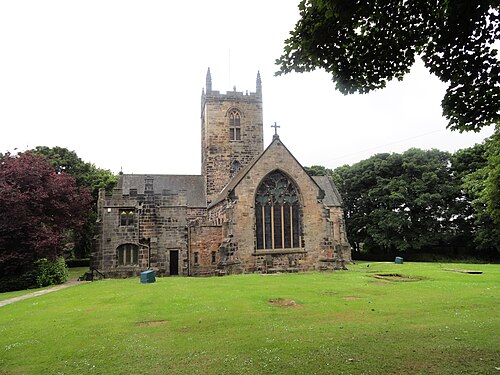
Houghton-le-Spring is a town situated in the City of Sunderland metropolitan borough in Tyne and Wear, Northeast England. Historically part of County Durham, it lies approximately seven miles to the southeast of Newcastle upon Tyne and about four miles southwest of Sunderland. The town's origins can be traced back to the Anglo-Saxon period, and it was first documented in the 11th century. The name "Houghton" signifies a "hill" or "rising ground" in Old English, while "Spring" refers to the presence of natural springs in the area. Over the centuries, Houghton-le-Spring evolved from a farming community to an industrial hub, particularly during the 19th century when coal mining became a primary economic driver. Various coal mines operated within the vicinity, contributing significantly to the local economy and employment.
In the 20th century, Houghton-le-Spring experienced significant changes as industries modernized and coal mining declined. The town's infrastructure improved with the development of housing and transportation, facilitating better access to surrounding urban centers. Today, Houghton-le-Spring boasts a blend of historical architecture, such as the 19th-century St. Michael and All Angels church, alongside modern amenities. The town is surrounded by green spaces, including the historic Houghton Hall Park, which provide recreational opportunities for residents and visitors alike. The population comprises a mix of long-term residents and newcomers, reflecting broader demographic trends in the region. Houghton-le-Spring retains a strong sense of community, hosting various local events and festivals throughout the year, fostering a vibrant local culture.
Education plays an essential role in the town, with several primary and secondary schools serving the local population. Houghton-le-Spring is also well-connected to larger cities through public transportation, including bus and rail services, which enhances accessibility to nearby amenities and employment opportunities. Although the town has seen economic fluctuations, it has adapted by diversifying its local economy, including retail and services. The public sector, particularly the health and education sectors, also employs a significant number of residents. Overall, Houghton-le-Spring combines a rich historical heritage with modern community life, making it an interesting place to live and visit in Northeast England.
Facts about Houghton-Le-Spring
- Houghton-le-Spring is historically known for its coal mining industry, which significantly contributed to the local economy during the 19th century.
- The town features the iconic St. Michael and All Angels Church, built in the 12th century, known for its stunning architecture and remarkable stained glass windows.
- Houghton-le-Spring is home to the famous 'Houghton Feast', a traditional annual fair that dates back to the 13th century, celebrating local culture and traditions.
- The town's name is derived from the Old English words 'Hoo' (hill) and 'ton' (town), indicating its geographical position on elevated land.
- Houghton-le-Spring serves as a gateway to nearby historic sites, such as the Pensher Hill, which offers panoramic views of the surrounding area.
- The town once hosted a thriving rope-making industry, particularly with the establishment of the Houghton Rope Works in the 19th century.
- Houghton-le-Spring is also known for its historic market square, which has served as a focal point for trade and community gatherings for centuries.
- The town has a rich sporting culture, particularly known for its passion for football, with local clubs contributing to community spirit.
- Houghton-le-Spring is located near the city of Sunderland and has excellent transport links, making it a popular residential area for commuters.
- It boasts several parks and green spaces, including the scenic Rainton Meadows, a nature reserve that supports diverse wildlife and offers recreational opportunities.