Howrah, India
- 1,027,672 people
- 12 places to visit
- 22.5958, 88.2636
Places to Visit (12)
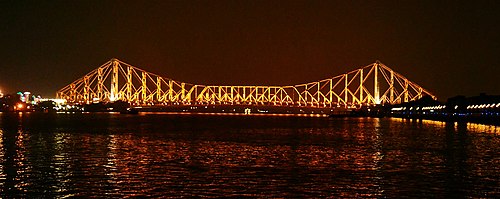
Howrah is a bustling city located in the eastern part of India, situated on the western bank of the Hooghly River in the state of West Bengal. It serves as a significant industrial and commercial hub, contributing substantially to the state’s economy. With a population of over 1.1 million people, Howrah is one of the most densely populated cities in India. Its strategic location adjacent to Kolkata makes it a vital part of the Kolkata Metropolitan Area. The city is well-connected through an extensive network of roads, railways, and waterways, facilitating trade and transportation. The spectacular Howrah Bridge, an iconic cantilever bridge completed in 1943, connects Howrah with Kolkata, serving as a symbol of the city's architectural significance and a lifeline for commuters.
Historically, Howrah has played a crucial role in India's socio-economic development. It emerged as an important center during the British colonial era due to its proximity to Kolkata and its access to the Hooghly River. The city has a diverse industrial base, focusing on engineering, manufacturing, and shipbuilding. Prominent industries include the production of jute, textiles, and transportation equipment. Howrah's economy has also seen growth in sectors like information technology and education, with several institutions providing vocational training and higher education to the local populace. The city is home to several landmarks, including the Howrah Maidan, the famous Dakshineswar Kali Temple, and a variety of parks and recreational areas that cater to the growing urban population.
Culturally, Howrah embodies a rich heritage reflective of West Bengal’s traditions. The city celebrates various festivals with enthusiasm, including Durga Puja, which showcases elaborate decorations and cultural performances, drawing visitors from across the region. Howrah also features a blend of languages and communities, with Bengali as the predominant language, complemented by Hindi and Urdu. The coexistence of diverse cultures contributes to the city’s vibrant atmosphere. With ongoing urban development and a focus on improving infrastructure, Howrah stands poised for continued growth and modernization while retaining its unique identity and historical significance.
Facts about Howrah
- Howrah is home to the Howrah Bridge, an engineering marvel and one of the busiest pedestrian bridges in the world, which connects Howrah and Kolkata over the Hooghly River.
- The city hosts the Howrah Station, one of the busiest railway stations in India, which serves as a major railway hub connecting various regions of the country.
- Howrah is known for its unique engineering heritage, being the site of the first iron bridge in India, the Howrah Bridge, commissioned in 1943.
- The city has a rich cultural history, with significant influence from the British colonial era, which is evidenced in its architecture and infrastructure.
- Howrah is famous for its diverse range of traditional Bengali sweets and snacks, including the popular 'Howrah Lassi' and 'Rasogolla'.
- The city is a major industrial hub in West Bengal, known for its production of engineering goods, textiles, and jute products.
- Howrah has a unique geographical feature: it is one of the few places in India where the city itself sits on the western bank of the Hooghly River, opposite Kolkata.
- The Howrah Maidan is one of the largest open spaces in the city and serves as a vital recreational area and gathering place for residents.
- Howrah hosts the famous Aamra Kolkata Festival, an annual cultural event that showcases the arts, crafts, and cuisine of Kolkata and Howrah, reflecting the rich cultural heritage of the region.
- The city is closely associated with the Bengali film industry and has produced numerous renowned filmmakers, actors, and musicians contributing to Indian cinema.