Huddersfield, United Kingdom
- 149,017 people
- 17 places to visit
- 53.6458, -1.785
Places to Visit (17)
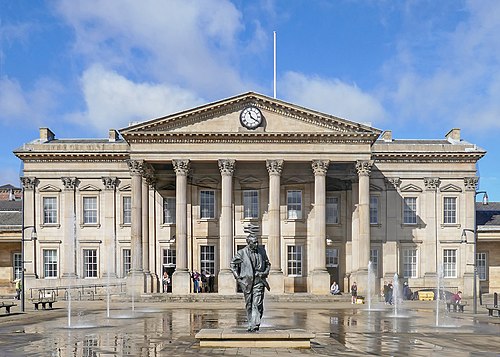
Huddersfield is a large market town located in West Yorkshire, England. It lies at the confluence of the River Colne and River Holme, just north of the Peak District National Park. Historically, it has been an important center for the woolen industry, particularly during the Industrial Revolution when its textile mills played a significant role in the growth of British manufacturing. Huddersfield's strategic location, situated approximately 20 miles from Leeds and 30 miles from Manchester, enhances its accessibility and economic relevance. The town has a rich architectural heritage, characterized by numerous Victorian-era buildings, with notable structures including the Huddersfield Railway Station and the university buildings of the University of Huddersfield, which has fostered local and regional development through higher education.
Today, Huddersfield is a vibrant town known for its diverse community and cultural offerings. With a population of around 162,000, it is one of the largest towns in the UK without city status. The town boasts a lively music and arts scene, exemplified by venues like the Lawrence Batley Theatre. Additionally, the Huddersfield Contemporary Music Festival is one of the largest annual contemporary music festivals in the country, showcasing local, national, and international talent. Sports are also a significant aspect of the community, particularly with the Huddersfield Town A.F.C. football club and Huddersfield Giants rugby league team, which enjoy dedicated followings. The town is surrounded by picturesque countryside, offering ample opportunities for outdoor activities, including hiking and cycling, particularly in the nearby moorlands of the South Pennines.
Huddersfield's economy has diversified over the years, moving beyond its traditional textile roots to include sectors such as education, healthcare, and technology. The University of Huddersfield plays a key role in this evolution, contributing to local research and innovation initiatives. Despite economic challenges, Huddersfield continues to thrive, balancing its historical significance with modern growth, making it a unique example of a town that honors its past while looking toward the future. With an increasingly diverse population and a commitment to cultural enrichment, Huddersfield remains an important part of the fabric of northern England.
Facts about Huddersfield
- Huddersfield is home to the UK's largest railway station by area, Huddersfield station, which features stunning Victorian architecture.
- The town played a significant role in the Industrial Revolution, particularly in textile manufacturing, earning it the title 'the birthplace of the modern woolen industry.'
- Huddersfield is known for its unique architecture, particularly the many Victorian and Georgian buildings, including the renowned Lawrence Batley Theatre, originally built in 1890.
- It hosts the Huddersfield Contemporary Music Festival, one of the largest festivals dedicated to contemporary music in the UK, showcasing local and international talent.
- Huddersfield was the birthplace of the popular British band The Verve, known for their hit 'Bitter Sweet Symphony.'
- The town boasts the world's deepest, longest canal tunnel, the Standedge Tunnel, which runs for about 3.1 miles under the Pennines.
- Huddersfield is home to the University of Huddersfield, recognized for its pioneering work in teaching and research, particularly in engineering and music.
- The town has a rich sporting history, being the birthplace of rugby league in 1895 with the establishment of the Northern Rugby Football Union.
- Huddersfield has a vibrant nightlife and cultural scene, with numerous independent bars, restaurants, and live music venues.
- The annual Huddersfield Food and Drink Festival celebrates local produce, attracting visitors and food enthusiasts from across the region.