Hunedoara, Romania
- 69,136 people
- 12 places to visit
- 45.7678, 22.9072
Places to Visit (12)
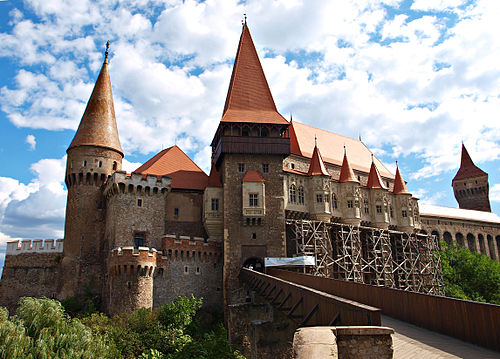
Hunedoara is a city located in Hunedoara County in western Romania, positioned in the historical region of Transylvania. It lies near the city of Deva and is flanked by the Retezat Mountains to the south and the Poiana Ruscă Mountains to the north. As of the last census, Hunedoara has a population of approximately 34,000 residents and serves as an important urban center within the region. Historically, the city's development is closely tied to the exploitation of its rich mineral resources and its role as a significant industrial hub, particularly during the 20th century when it was at the forefront of iron and steel production in Romania.
One of Hunedoara’s most notable landmarks is the Corvin Castle (Castelul Corvinilor), a Gothic-Renaissance fortress dating back to the 14th century. The castle is among the largest in Europe and is a prime example of medieval architecture, attracting numerous tourists each year. It holds a rich history, as it was the residence of John Hunyadi, one of the most prominent figures of medieval Hungary. The city is also enriched with cultural influences reflecting its diverse historical legacy, with various churches and monuments that illustrate the region's past. In addition to its historical significance, Hunedoara has made strides in modern industrialization, with sectors such as mining and manufacturing continuing to play vital roles in the local economy.
In recent years, Hunedoara has also focused on promoting tourism beyond its historical sites, emphasizing access to natural beauty and outdoor activities in the surrounding mountains. Visitors can explore numerous hiking trails and enjoy the picturesque landscapes that define the region. Moreover, the local economy has diversified, with developments in services and small enterprises contributing to the community's growth. The blend of rich history, cultural heritage, and natural beauty makes Hunedoara a compelling destination for both domestic and international travelers, reflecting the enduring appeal of this Romanian city.
Facts about Hunedoara
- Hunedoara is home to the Corvin Castle, one of the largest and most impressive Gothic-Renaissance castles in Europe, which dates back to the 14th century.
- The city is located in the historical region of Transylvania, known for its medieval architecture and beautiful landscapes, making it a popular tourist destination.
- Hunedoara was an important industrial center in the 20th century, particularly for its iron and steel production, which significantly contributed to Romania's economy.
- The city hosts the annual 'Medieval Festival at Corvin Castle,' which attracts thousands of visitors and celebrates the medieval heritage of the region.
- Hunedoara is situated near the Retezat National Park, a UNESCO Biosphere Reserve, known for its stunning mountain landscapes, biodiversity, and hiking trails.
- The city played a prominent role during the medieval period as part of the Kingdom of Hungary, serving as a strategic location for trade and defense.
- Hunedoara is renowned for its unique architectural blend, featuring styles from different historical periods, particularly evident in its churches and public buildings.
- The local economy has diversified in recent years, with a growing focus on tourism, which has helped to preserve and promote the city's rich cultural heritage.
- Hunedoara is known for the 'Dacian Fortresses of the Orăștie Mountains,' which are UNESCO World Heritage Sites reflecting the ancient Dacian civilization.
- The city has a vibrant local culture, with various festivals and events that celebrate traditional Romanian crafts, music, and gastronomy, distinguishing it from other cities.