Ibadan, Nigeria
- 3,649,000 people
- 14 places to visit
- 7.3775, 3.947
Places to Visit (14)
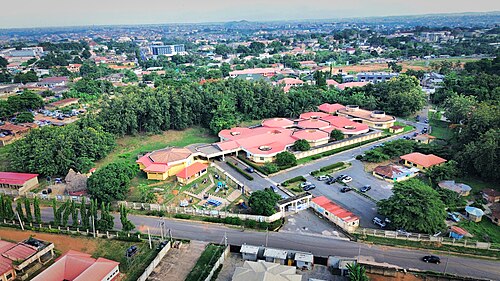
Ibadan, the capital city of Oyo State in southwestern Nigeria, is one of the largest and most historically significant cities in the country. Established in the 1820s as a military outpost, it developed into a prominent center of commerce and culture. Situated approximately 128 kilometers northeast of Lagos, Ibadan is renowned for its expansive land area, which exceeds that of Lagos, making it one of the largest cities in Africa. As of the 2023 census estimate, Ibadan has a population of over three million inhabitants, representing a diverse mix of ethnic groups, with the Yoruba being the predominant ethnicity.
The city is notable for its rich historical and educational heritage. Ibadan is home to the University of Ibadan, Nigeria's first university, founded in 1948, which has produced numerous distinguished alumni in various fields. The city also boasts several other institutions of higher education and research centers, contributing significantly to Nigeria's educational landscape. Ibadan's rich cultural tapestry is reflected in its numerous festivals, traditional practices, and arts, such as the annual Ataoja festival celebrated in honor of the town's chief. Architecturally, the city features a blend of traditional and modern structures, with landmarks like the Cocoa House, Nigeria's first skyscraper, showcasing its historical significance in the cocoa industry, which played a vital role in the nation’s economy during the mid-20th century.
In addition to its educational and cultural importance, Ibadan serves as a major commercial hub. The city hosts bustling markets, such as the Bodija Market, which is recognized for its agricultural produce and various goods. The economy of Ibadan is primarily driven by agriculture, trade, and manufacturing, with cassava, maize, and yam being some of the major crops cultivated in the region. The city's transportation infrastructure includes a network of roads and rail connections, facilitating trade and movement. As one of Nigeria's significant urban centers, Ibadan continues to evolve, balancing tradition and modernity while maintaining its position as a vital contributor to the country's socio-economic development.
Facts about Ibadan
- Ibadan is the capital city of Oyo State and is known as one of the largest cities in Nigeria by land area.
- The University of Ibadan, established in 1948, is Nigeria's first university and has a prominent role in higher education in West Africa.
- Ibadan is home to the Cocoa House, the first skyscraper in West Africa, built in 1965 and a symbol of the region's historical significance in the cocoa trade.
- The city is known for its rich history, as it was a major center for the agricultural trade during the late 18th to early 19th centuries.
- Ibadan has numerous notable landmarks, including the National Museum, which houses artifacts showcasing Nigerian history and culture.
- The city is famous for its traditional cuisine, particularly 'Amala' and 'Ewedu,' and is often considered the culinary capital of Nigeria.
- The Ibadan city layout is characterized by large residential areas, with many historical buildings and colonial architecture still present.
- Ibadan is significant in Nigerian politics and has produced several notable political leaders and personalities over the years.
- The city hosts the annual Ibadan Book Festival, celebrating literature and the arts, and promoting reading culture among the youths.
- Ibadan is the home to the Mapo Hall, a historic colonial building and one of the first civic centers in Nigeria, showcasing early 20th-century architecture.