Ica, Peru
- 282,407 people
- 11 places to visit
- -14.0755, -75.7342
Places to Visit (11)
Ica is a city located in the southwestern region of Peru, serving as the capital of the Ica Province and the Ica Department. Nestled along the Pan-American Highway, approximately 300 kilometers south of Lima, Ica is known for its arid climate, with temperatures averaging around 24°C (75°F) and minimal rainfall throughout the year. The city's economy is heavily influenced by agriculture, particularly the cultivation of grapes, which are used for both table consumption and the production of pisco, a traditional Peruvian distilled spirit. The region's fertile valleys and advanced irrigation systems support the growth of various crops, including cotton, asparagus, and olives, making Ica a significant agricultural hub.
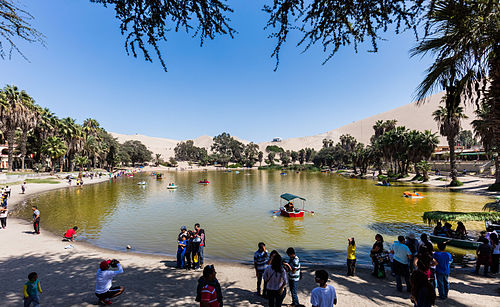
Tourism is another vital aspect of Ica's economy, attracting visitors with its rich cultural heritage and stunning natural landscapes. The nearby Huacachina oasis, a unique desert lagoon surrounded by towering sand dunes, is a popular destination for adventure activities such as sandboarding and dune buggy rides. The region is also home to the Paracas National Reserve, known for its diverse marine wildlife, including sea lions and various seabird species. Ica's history is evident in its numerous archaeological sites, including the ancient Nazca Lines, geoglyphs etched into the desert floor that date back to between 500 BCE and 500 CE. These enigmatic designs, which feature various shapes and figures, continue to intrigue researchers and tourists alike, contributing to Ica's appeal as a destination rich in both history and natural beauty.
Facts about Ica
- Ica is known for its vineyards and is one of the primary wine-producing regions in Peru, famous for its Pisco brandy.
- The city is home to the Huacachina oasis, a unique natural desert oasis surrounded by sand dunes, which serves as a popular tourist destination for sandboarding and dune buggy rides.
- Ica was founded in 1569 by the Spanish conquistador Juan Carlos de la Torre and has a rich colonial history that is reflected in its architecture.
- The region is also known for the nearby Nazca Lines, ancient geoglyphs etched into the ground that are believed to have been created by the Nazca culture between 500 BC and 500 AD.
- Ica hosts the Wine and Pisco Festival annually, celebrating its viticulture heritage with tastings, workshops, and cultural performances.
- The city is also the gateway to the Paracas National Reserve, a protected area known for its diverse wildlife, coastal ecosystems, and the famous Ballestas Islands.
- Ica has one of the driest climates in the world, receiving minimal rainfall, which contributes to its specialized agricultural practices, particularly in grape harvesting.
- The Regional Museum of Ica houses an extensive collection of artifacts from various ancient civilizations, showcasing the region's archaeological significance.
- Ica’s Cathedral, built in 1569, is a notable landmark that reflects the Spanish colonial style and is located in the main square of the city.
- The area around Ica is rich in prehistoric geologic formations, including fossilized remains known as the 'Ica Stones,' which some claim show evidence of ancient human life alongside dinosaurs.