Iguala de la Independencia, Mexico
- 118,468 people
- 16 places to visit
- 18.3448, -99.5397
Places to Visit (16)
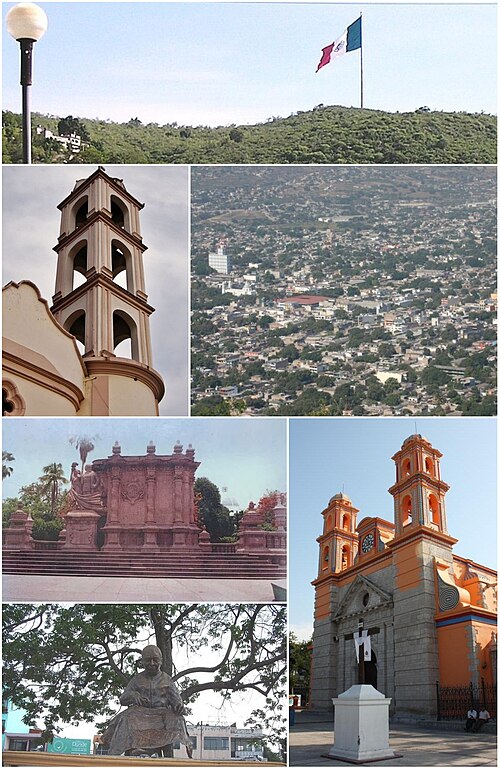
Iguala de la Independencia is a city located in the state of Guerrero, Mexico. Situated approximately 100 kilometers southwest of Mexico City, it serves as the municipal seat of the Iguala municipality. The city is positioned in a valley, surrounded by mountains and has a population of around 100,000 residents as of the 2020 census. Iguala is notably recognized for its historical significance, particularly its connections to Mexican independence. The city was an important site during the early 19th century, as it is where the Plan of Iguala was proclaimed in 1821 by Agustín de Iturbide and Vicente Guerrero, marking a pivotal moment in the struggle for independence from Spanish colonial rule.
In addition to its historical importance, Iguala is also known for its vibrant local culture, characterized by a blend of indigenous and mestizo traditions. The city hosts several annual festivals that reflect its rich cultural heritage. One of the most prominent celebrations is the Fiesta de los Muertos, where locals honor deceased family members through various customs and rituals. Economically, Iguala relies on agriculture, commerce, and tourism, with the cultivation of crops such as sugar cane and corn being central to its economy. The city is also famous for its production of the “Iguala” style of pottery and ceramics, which are popular both regionally and nationally.
Despite its cultural and historical significance, Iguala has faced challenges, particularly concerning security and crime. The city gained international attention in 2014 when 43 students from a local teacher training college went missing, leading to widespread protests and drawing concern about corruption and violence in the area. This tragic event highlighted the ongoing issues related to drug trafficking and organized crime in Guerrero. Nevertheless, Iguala de la Independencia remains an essential part of Mexico’s historical landscape and a community engaging with its past while looking towards the future.
Facts about Iguala de la Independencia
- Iguala de la Independencia is historically significant as it is the site where, in 1810, the plan for Mexican independence from Spanish rule was first declared.
- The city is home to the iconic Monument to the Independence, which commemorates the signing of the Iguala Plan, a pivotal moment in Mexican history.
- Iguala was founded in 1824, and its name translates to 'place of the pewter' in the Nahuatl language, reflecting its indigenous roots.
- The city hosts the annual Festival of the Independence, celebrating local culture with parades, music, dance, and traditional food.
- Iguala is known for its role in the production of metal crafts and pottery, which are reflective of the region's artisanal traditions.
- The city's main square, Plaza de la Independencia, features several historical landmarks, including the Cathedral of Iguala, which showcases neoclassical architecture.
- Iguala is often referred to as the 'cradle of independence' because of its central role in the early movements that led to Mexico's liberation from colonial rule.
- The surrounding area includes the famous Iguala-Rio Balsas region, known for its rich biodiversity and archaeological sites, including those related to pre-Hispanic cultures.
- In 2014, Iguala gained international attention due to the abduction of 43 students, which highlighted significant social and political issues in Mexico.
- The city is also known for the annual 'Feria de Iguala,' a fair featuring local products, rides, and cultural exhibitions, drawing visitors from all over the region.