Iquitos, Peru
- 377,609 people
- 10 places to visit
- -3.7438, -73.2516
Places to Visit (10)
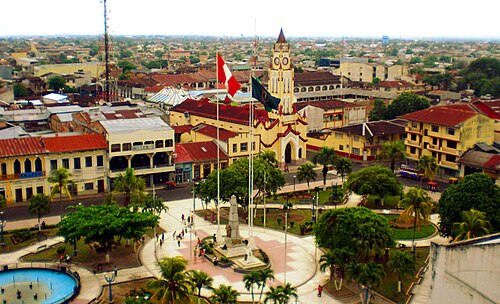
Iquitos, the largest city in the Amazon rainforest and the capital of the Loreto Region in Peru, is situated alongside the confluence of the Amazon, Nanay, and Itaya rivers. With a population exceeding 400,000, it is a vibrant hub of culture, commerce, and tourism, being the most populous city in the world that cannot be reached by road. Instead, it is accessible only by river or air, which adds to its unique charm. The city has a rich history, dating back to the indigenous tribes that inhabited the region before Spanish colonization in the 16th century. During the 19th century, Iquitos thrived due to the rubber boom, attracting immigrants from Europe and Asia, which has contributed to its diverse cultural landscape.
Iquitos features a mix of modern urban life and traditional Amazonian culture. The city's architecture reflects its eclectic history, including classic mansions from the rubber boom era and lively markets like the Belén Market, where visitors can find local produce, crafts, and traditional medicines. The economy of Iquitos relies heavily on tourism, agriculture, and fishing, with ecotourism becoming increasingly significant due to the city's proximity to the Amazon rainforest and its rich biodiversity. Nearby attractions include the Pacaya-Samiria National Reserve, known for its vast array of wildlife, and various indigenous communities that offer insight into traditional Amazonian lifestyles. Despite challenges such as deforestation and environmental degradation, Iquitos serves as a gateway for travelers seeking to explore the Amazon and experience its natural wonders.
Facts about Iquitos
- Iquitos is the largest city in the world that cannot be reached by road; it is only accessible by river or air.
- The city is located deep in the Amazon rainforest and is often referred to as the 'capital of the Amazon' in Peru.
- Iquitos boasts the famous Iron House (Casa de Fierro), designed by Gustave Eiffel, which was completed in 1890 and showcases unique architecture.
- During the rubber boom in the late 19th century, Iquitos experienced rapid growth, becoming one of the wealthiest cities in Peru.
- The region is home to a vibrant marine ecosystem and offers various eco-tourism opportunities, including exploring the Pacaya-Samiria National Reserve.
- Iquitos hosts the annual Festival of San Juan, celebrating the patron saint of fishermen, which features local music, dance, and culinary delights.
- The city has unique floating markets, such as the Belén Market, where local traders sell their goods from boats along the waterways.
- Iquitos is known for the unique cuisine that includes exotic regional dishes such as juanes (rice and meat wrapped in banana leaves).
- The city is a hub for Amazonian indigenous culture, with various communities and traditions preserved in its local population.
- Iquitos is a center for ayahuasca tourism, attracting visitors interested in traditional shamanic practices and plant-based medicine.