Irkutsk, Russian Federation
- 623,869 people
- 13 places to visit
- 52.2855, 104.289
Places to Visit (13)
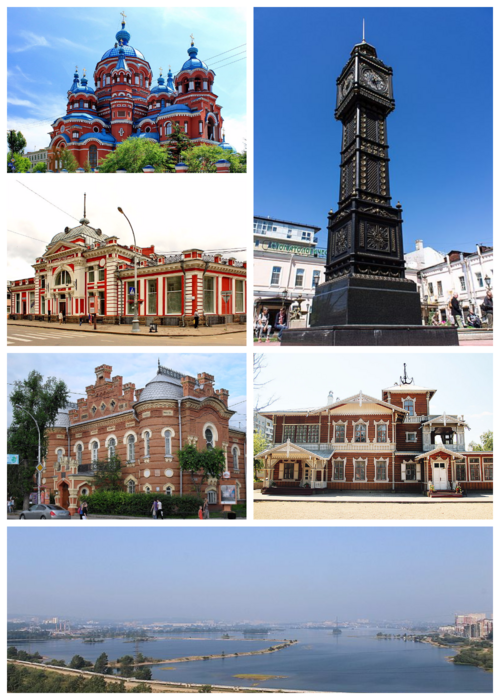
Irkutsk is a historic city located in southeastern Siberia, Russia, and serves as the administrative center of Irkutsk Oblast. Founded in 1661 as a fort, it developed rapidly as a trading post due to its strategic location along the Angara River and its proximity to Lake Baikal, the world's deepest freshwater lake. Over the centuries, Irkutsk has evolved into a vital cultural and economic hub in Siberia, rooted in a blend of Russian and local indigenous cultures. With a population of approximately 600,000, it stands as one of Siberia's largest cities and is often referred to as the “Paris of Siberia” for its rich history and vibrant cultural life.
The city features well-preserved architectural landmarks that reflect its past, including wooden houses crafted in the Siberian style and ornate churches, such as the Savior Church and the Epiphany Cathedral, which are testaments to the city's 19th-century prosperity. The Trans-Siberian Railway, one of the longest railways in the world, passes through Irkutsk, enhancing its significance as a transportation and logistical center. Irkutsk is also recognized for its educational institutions, including Irkutsk State University, which attracts students from across Russia and neighboring countries. The city is particularly popular among tourists as a gateway to Lake Baikal, a UNESCO World Heritage site renowned for its stunning natural beauty and biodiversity. In recent years, Irkutsk has embraced its cultural identity through various festivals, art exhibitions, and historical reconstructions that celebrate both its Russian heritage and the unique traditions of the indigenous Buryat people.
Despite the challenges posed by its harsh climate, including long, cold winters, Irkutsk is known for its resilient spirit and lively community. The economy is diverse, with sectors including education, manufacturing, and tourism playing pivotal roles. The region's rich natural resources, particularly its forests and minerals, further contribute to its economic development. As a city where history, nature, and culture converge, Irkutsk embodies the enduring character of Siberia and serves as a fascinating destination for those seeking to understand Russia's vast and varied landscape.
Facts about Irkutsk
- Irkutsk is known as the 'Paris of Siberia' due to its rich cultural history and vibrant artistic scene.
- The city is located near Lake Baikal, the deepest and oldest freshwater lake in the world, which is a UNESCO World Heritage Site.
- Irkutsk has a unique wooden architecture, with many historic wooden houses that showcase the traditional Siberian style.
- The Decembrists, Russian revolutionaries, were exiled to Irkutsk in the 19th century, influencing the city's cultural and intellectual life.
- Irkutsk is one of the largest cities in Siberia and serves as a major administrative, economic, and cultural center for the region.
- The city's historical center features the Irkutsk Holy Cross Cathedral, a notable symbol of Orthodox faith in Siberia.
- Every February, Irkutsk hosts the Baikal Ice Marathon, attracting participants to run on the frozen surface of Lake Baikal.
- Irkutsk is home to the Irkutsk State University, one of the oldest universities in Eastern Siberia, established in 1918.
- The Angara River flows through Irkutsk, making it one of the few rivers in the world that flows out of Lake Baikal.
- The city boasts a lively mix of cultures, with influences from Buryat, Russian, and other ethnic groups that contribute to its diverse heritage.