Islamabad, Pakistan
- 601,600 people
- 16 places to visit
- 33.6995, 73.0363
Places to Visit (16)
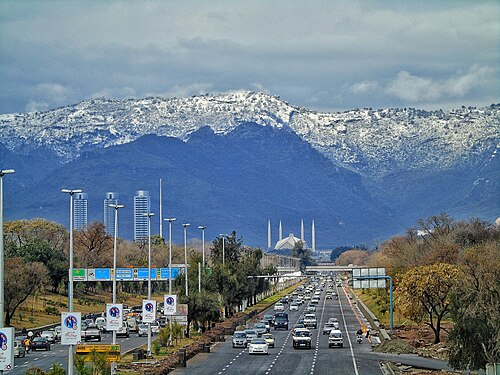
Islamabad is the capital city of Pakistan, strategically located in the northern part of the country, near the foothills of the Margalla Hills. Established in the 1960s to replace Karachi as the capital, Islamabad was designed by the Greek architect Constantinos Apostolou Doxiadis. The city is characterized by its modern architecture, organized layout, and green spaces, making it distinct from other urban areas in Pakistan. Covering an area of approximately 906 square kilometers, Islamabad is known for its wide avenues, spacious parks, and a relatively low population density compared to other Pakistani cities. According to the 2017 census, the city’s population is over 1 million, comprising diverse ethnic groups including Punjabis, Pashtuns, and Muhajirs.
Islamabad is home to several important institutions, including the National Assembly, the Supreme Court, and various foreign embassies, reflecting its status as the political heart of Pakistan. The city is divided into different sectors, each serving specific purposes such as residential, commercial, and educational. Prominent landmarks include the Faisal Mosque, one of the largest mosques in the world, built in a contemporary architectural style, and the Pakistan Monument, which symbolizes the unity of the nation. The city also offers various cultural and recreational activities, with venues like Lok Virsa Museum showcasing Pakistan's rich heritage. Notably, Islamabad is surrounded by scenic landscapes, including the Margalla Hills National Park, which provides opportunities for hiking and outdoor activities, further enriching the lifestyle of its residents. Despite its relatively short history, Islamabad has emerged as an essential hub for education, healthcare, and commerce, making it a vital part of Pakistan's socio-economic framework.
Facts about Islamabad
- Islamabad is the capital city of Pakistan, officially designated as such in the 1960s, replacing Karachi as the capital due to its strategic location and organized urban planning.
- The city was specifically designed by the Greek architect Constantinos Apostolou Doxiadis, reflecting modern architectural principles and green spaces.
- Islamabad is home to the Faisal Mosque, which is the largest mosque in Pakistan and an iconic symbol of the city, known for its unique contemporary design resembling a Bedouin tent.
- The city features a significant number of parks and forests, including the Margalla Hills National Park, providing residents and visitors with hiking trails and beautiful landscapes.
- Islamabad is the only city in Pakistan that periodically experiences pollution control measures and is designed with wide avenues and a low population density compared to other major cities.
- The city boasts several important government buildings, including the Parliament House, the Presidential Palace, and the Supreme Court, all designed to reflect the nation’s political integrity.
- Islamabad is widely regarded for its educational institutions, hosting several prestigious universities like Quaid-i-Azam University, which ranks among the top universities in Pakistan.
- Events like the Pakistan Day parade and various cultural festivals take place in Islamabad, emphasizing the nation’s heritage and unity.
- Cultural landmarks in the city include the Lok Virsa Museum, which showcases Pakistan's diverse cultural heritage through art, craft, and music.
- Islamabad is recognized for being one of the most environmentally friendly cities in Pakistan, featuring numerous green belts and an emphasis on urban nature conservation.