Istanbul, Turkey
- 14,804,116 people
- 19 places to visit
- 41.0082, 28.9784
Places to Visit (19)
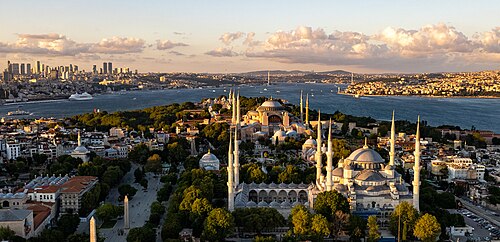
Istanbul, Turkey's most populous city, is a vibrant metropolis that straddles Europe and Asia across the Bosphorus Strait. With a history that dates back thousands of years, it has been a pivotal cultural and political center through various empires, including the Byzantine and Ottoman Empires. Istanbul's unique geographical position has long made it a crossroads of trade and culture, contributing to its rich and diverse heritage. The city has a population exceeding 15 million people, making it one of the largest cities in the world. Its historic sites, such as the Hagia Sophia, Topkapi Palace, and the Blue Mosque, illustrate the city's architectural evolution and the fusion of different cultural influences.
Modern Istanbul is a dynamic urban center that blends tradition with contemporary life. The city boasts a lively arts scene, vibrant markets like the Grand Bazaar, and an array of culinary delights ranging from street food to upscale dining. The neighborhoods of Istanbul each offer unique experiences; districts like Sultanahmet are steeped in history, while areas such as Kadikoy and Taksim are known for their modern lifestyle and nightlife. Its public transportation system, which includes ferries, trams, and metros, enhances connectivity within this sprawling city. As a UNESCO World Heritage Site, Istanbul continues to attract millions of tourists each year, drawn not only by its historical wonders but also by its strategic significance and allure as a global city.
The city's challenges are as notable as its charms. Rapid urbanization has led to housing shortages, traffic congestion, and environmental concerns. Nevertheless, Istanbul remains resilient, continuously evolving while holding onto its historical roots. Events such as the Istanbul Biennial and the Istanbul Film Festival showcase its cultural vibrancy, further establishing its importance as a hub for art and innovation. With its fascinating blend of old and new, Istanbul persists as a symbol of cultural convergence and a testament to the enduring legacy of its diverse history.
Facts about Istanbul
- Istanbul is the only city in the world that spans two continents, Europe and Asia, separated by the Bosphorus Strait.
- The city has a rich history spanning over 2,500 years, having been known as Byzantium and later, Constantinople before adopting its current name.
- Istanbul is home to the Hagia Sophia, an architectural marvel that has served as both a cathedral and a mosque, now functioning as a museum.
- The Grand Bazaar in Istanbul is one of the oldest and largest covered markets in the world, featuring over 4,000 shops and attracting millions of visitors each year.
- Istanbul's skyline is famously punctuated by the iconic Blue Mosque, known for its stunning blue tiles and impressive six minarets.
- The city boasts an extensive public transportation system, including ferries that connect its European and Asian sides, as well as the historic tramway on Istiklal Avenue.
- Istanbul was the capital of three empires: the Roman, Byzantine, and Ottoman, influencing its diverse culture and historical significance.
- The city is known for its vibrant arts scene, hosting the Istanbul Biennial, one of the most prestigious contemporary art exhibitions in the world.
- Istanbul has a unique culinary tradition that includes dishes like kebabs, mezes, and baklava, blending influences from various cultures due to its historical position as a trade hub.
- The Çamlıca Hill offers one of the best panoramic views of Istanbul, providing a stunning backdrop of the city's unique blend of modern and historical architecture.