Itabuna, Brazil
- 205,660 people
- -14.7924, -39.2821
No places available for this city.
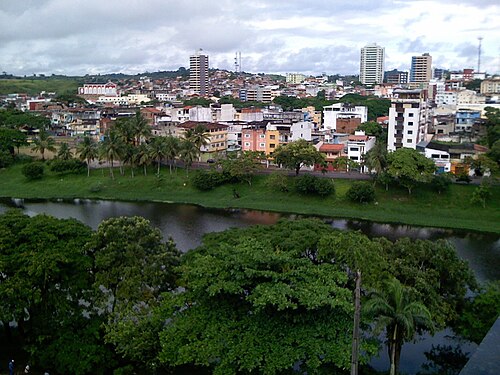
Itabuna is a city located in the southern region of Bahia, Brazil. Situated approximately 450 kilometers southwest of Salvador, the state capital, Itabuna serves as an important economic and cultural hub in the region. Founded in 1910, the city developed rapidly due to its strategic position near the chocolate-producing region of Bahia, leveraging the cultivation of cacao and the associated industries. Itabuna became a municipality in 1911 and has since evolved into a center for commerce, services, and education, contributing significantly to the local economy.
With a population of around 220,000 inhabitants, Itabuna is recognized for its vibrant community life, offering various cultural events, festivals, and religious celebrations that reflect the diverse heritage of its residents. The city's landscape is dominated by lush greenery and the nearby Atlantic rainforest, providing opportunities for outdoor activities and eco-tourism. Itabuna's climate is classified as tropical humid, characterized by warm temperatures and seasonal rainfall, which supports agriculture and the local economy. The city is known for its educational institutions, with several universities and professional schools that enhance the cultural fabric and societal development of the area.
Itabuna also plays a crucial role in regional transportation, serving as a junction for major highways linking it to other important cities in Bahia and beyond. The infrastructure includes a local airport, which facilitates connectivity for business and tourism. The growth of various sectors, including commerce, industry, and services, has made Itabuna a dynamic urban center. Its cultural richness, economic importance, and strategic location contribute to its status as a key player in Brazil's southern Bahia region.
Facts about Itabuna
- Itabuna is known as the 'Chocolate Capital of Brazil' due to its significant cocoa production and chocolate industry, making it distinct in a country renowned for its agriculture.
- The city played a crucial role in the Brazilian cocoa boom during the early 20th century, which significantly influenced its economic development and cultural landscape.
- Itabuna is home to the largest urban coconut grove in Brazil, providing a unique ecological feature that sets it apart from other cities.
- The city's famous 'Cacau Festival' is an annual event that celebrates the local cocoa industry and its associated products, attracting tourists and promoting local culture.
- Itabuna has several historical buildings, such as the 'Igreja de São José' (Church of Saint Joseph), which showcases Romanesque and Neo-Gothic architectural styles from the early 20th century.
- The region surrounding Itabuna, known as the 'Cocoa Region', is recognized for its biodiversity and is a UNESCO World Heritage Site due to its unique ecosystems and cocoa plantations.
- Itabuna was once a leading center for the production of quality coffee before the economy shifted towards cocoa, distinguishing its agricultural history.
- The city hosts the 'Exposição de Cachaça' (Cachaça Expo), an event that emphasizes the importance of this traditional Brazilian spirit, reflecting the local culture and economy.
- Itabuna has a vibrant music scene, home to many local artists and genres, such as Axé and MPB (Música Popular Brasileira), contributing to its cultural identity.
- The city's geographical location between the Atlantic Ocean and the southern Bahia mountains provides a unique climate perfect for both agriculture and tourism.