Itoigawa, Japan
- 30,865 people
- 13 places to visit
- 37.039, 137.8628
Places to Visit (13)
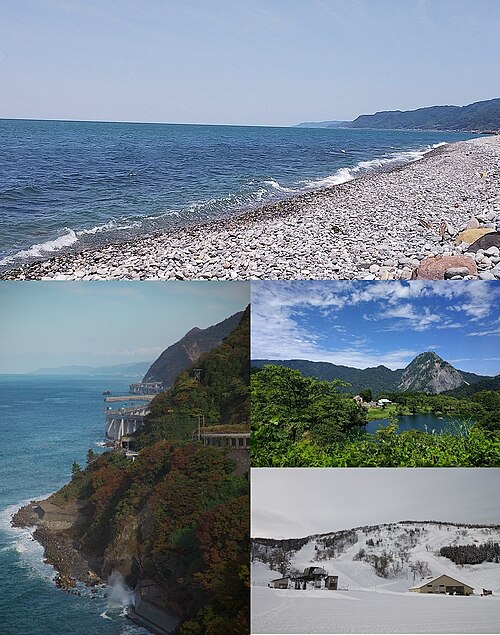
Itoigawa is a city located in Niigata Prefecture, Japan, known for its stunning natural scenery, rich history, and geological significance. Nestled between the Sea of Japan and the Northern Alps, Itoigawa boasts a rugged coastline along with mountainous terrain, which attracts outdoor enthusiasts and nature lovers. The city has a population of approximately 36,000 people and covers an area of 1,126.28 square kilometers. Itoigawa's climate is characterized by heavy snowfall in winter and mild summers, making it suitable for various seasonal activities, including skiing and hiking.
Historically, Itoigawa has significant cultural and economic importance. It was part of the ancient route connecting the Hokuriku region with Niigata and served as a gateway for trade between various parts of Japan. The city is notable for its production of high-quality granite, known as Itoigawa stone. This stone is highly sought after for construction and artistic purposes, contributing to the local economy. Additionally, Itoigawa has deep connections to the traditional Japanese art of sake brewing, with several well-known sake breweries producing quality beverages that reflect the region's rich agricultural heritage.
Itoigawa is also recognized for its unique geological features, particularly the Itoigawa–Shizuoka Tectonic Line, which marks a boundary between different geological formations. This line has attracted the interest of scientists and researchers studying seismic activity and tectonic plates. The city hosts the Itoigawa Geological Museum, which provides insights into the area's geological history and offers educational programs for visitors. Furthermore, Itoigawa is a designated UNESCO Global Geopark, promoting awareness of the region's geological resources and encouraging sustainable tourism. Overall, Itoigawa stands out as a city that harmonizes natural beauty, cultural significance, and scientific interest, making it a fascinating destination in Japan.
Facts about Itoigawa
- Itoigawa is known for its unique geological features, including various types of rocks and minerals, due to its location along the boundary of the Japanese Alps.
- The city is home to the Itoigawa UNESCO Global Geopark, which highlights its geological diversity and promotes geological education and conservation.
- Itoigawa was the site of ancient jade quarrying, making it historically significant for its production of high-quality jade, which is still revered today.
- The Itoigawa region is famous for its beautiful marine scenery, particularly the Toyama Bay and the surrounding coastal areas, ideal for marine activities and tourism.
- Itoigawa hosts the 'Itoigawa Fureai Festival,' celebrated annually, which showcases local culture, tradition, and community spirit through various performances and food stalls.
- The city is also celebrated for its rice cultivation, especially for the 'Itoigawa Koshihikari' variety, which is ranked among the best rice in Japan.
- Itoigawa is the birthplace of the famous Japanese author Yasunari Kawabata, who won the Nobel Prize in Literature in 1968.
- The city is strategically located along the Japan Sea coast, providing a natural harbor that has historically been essential for trade and maritime activities.
- Itoigawa is famous for its breathtaking scenery, including the 'Kurobe Alpine Route,' which offers stunning views of mountains and landscapes.
- The local hot springs in Itoigawa, such as 'Nabekanmuriyu,' are known for their healing properties and attract visitors seeking relaxation and rejuvenation.