Jaipur, India
- 2,711,758 people
- 16 places to visit
- 26.9124, 75.7873
Places to Visit (16)
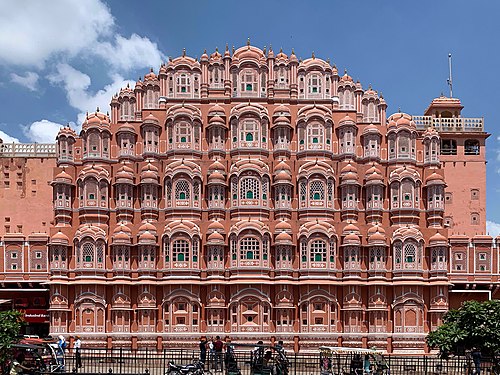
Jaipur, the capital city of the Indian state of Rajasthan, is renowned for its rich history, vibrant culture, and stunning architecture. Founded in 1727 by Maharaja Sawai Jai Singh II, Jaipur was one of the earliest planned cities in India. Its design follows a grid layout, making it unique among Indian cities of the era. The city is popularly known as the "Pink City" due to the terracotta pink color of its buildings, which was painted to welcome the visit of the Prince of Wales in 1876. This distinctive color has become synonymous with Jaipur, and the city boasts several grand forts and palaces, including the iconic Hawa Mahal, City Palace, and Amber Fort. These structures not only reflect the lavish lifestyles of the Rajput rulers but also showcase a blend of Mughal and Rajput architectural styles.
Despite its historical significance, Jaipur is also a bustling center of commerce and tourism, attracting millions of visitors every year. It is part of the Golden Triangle tourist circuit, which includes Delhi and Agra, making it easily accessible for travelers. The city is known for its vibrant markets, where local artisans sell traditional crafts, textiles, jewelry, and souvenirs. The annual Jaipur Literature Festival has gained international fame, drawing authors, poets, and thinkers from around the world, further enhancing the city’s cultural significance. Additionally, Jaipur's culinary scene offers a rich variety of traditional Rajasthani dishes, such as dal bati churma and ghevar, which reflect the region's diverse flavors and cooking styles.
As a UNESCO World Heritage Site, Jaipur's rich heritage is preserved through various conservation efforts, allowing visitors to step back in time while enjoying modern amenities. The city's blend of historic and contemporary life makes it a unique destination in India. Its enchanting beauty, royal history, and vibrant culture continue to capture the hearts of those who visit, establishing Jaipur as a significant icon of India's past and present.
Facts about Jaipur
- Jaipur is known as the 'Pink City' due to the distinctive color of its buildings, which were painted pink to welcome the Prince of Wales in 1876.
- The city is part of India's first planned city and was founded in 1727 by Maharaja Sawai Jai Singh II, a ruler of the Kachwaha clan.
- Jaipur is home to the Jantar Mantar, an astronomical observatory built in the 18th century, which is a UNESCO World Heritage Site and features the world's largest stone sundial.
- The City Palace in Jaipur is a stunning blend of Rajput and Mughal architecture, and it still serves as the residence of the royal family, making it unique among Indian cities.
- Jaipur's Amer Fort is famous for its artistic Hindu style elements, and its unique feature is the integration of the fort with the natural landscape, providing breathtaking views.
- Jaipur hosts the annual Jaipur Literature Festival, one of the largest literary festivals in Asia, attracting writers, thinkers, and attendees from around the globe.
- The Hawa Mahal, or 'Palace of Winds,' is an iconic symbol of Jaipur, with its intricate lattice work and beehive-like facade designed to allow royal women to observe street festivals without being seen.
- The Jaipur Development Authority introduced the concept of a bus rapid transit system (BRT) in the city, making it one of the first cities in India to implement such urban transport solutions.
- Jaipur is famous for its handicrafts, including traditional block printing, blue pottery, and jewelry, distinguishing it as a significant hub for artisans in India.
- The city is a prominent part of the Golden Triangle tourist circuit, which includes Delhi and Agra, and is known for its blend of rich history, culture, and architectural heritage.