Jakarta, Indonesia
- 8,540,121 people
- 4 places to visit
- -6.1944, 106.8229
Places to Visit (4)
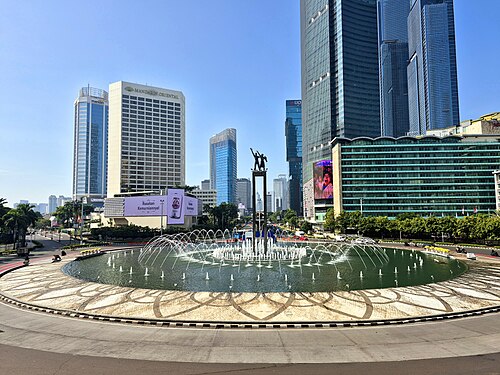
Jakarta, the capital city of Indonesia, is a sprawling metropolis located on the northwest coast of Java, the world's most populous island. With a population exceeding 10 million within its city limits, and over 30 million in the greater Jakarta area, it stands as one of the largest urban centers in Southeast Asia. Jakarta serves as the political, economic, and cultural hub of Indonesia. The city has a rich history, tracing its roots back to the 4th century when it was known as Sunda Kelapa, a vital port for the Hindu Kingdom of Sunda. In 1619, it was captured by the Dutch and renamed Batavia, which remained the dominant name during the colonial era. After Indonesia gained independence in 1945, the city was officially renamed Jakarta.
Modern Jakarta is characterized by its diverse population, comprising various ethnic groups, languages, and cultures, reflecting the nation's vast array of traditions. The economy is a mix of manufacturing, trade, and services, with Jakarta generating a significant portion of Indonesia’s GDP, making it a key driver of the country's economic growth. The city's skyline is marked by towering skyscrapers housing multinational corporations alongside traditional markets and historic sites, such as the National Monument and the Kota Tua (Old Town). Jakarta faces challenges common to megacities, including traffic congestion, pollution, and flooding, exacerbated by its rapid urbanization. The government has implemented various initiatives aimed at improving infrastructure and public transportation, such as the Mass Rapid Transit (MRT) system, which began operations in 2019, and plans for a new capital city to alleviate some pressures on Jakarta.
Despite its challenges, Jakarta remains a vibrant city known for its dynamic lifestyle, rich culinary scene, and bustling arts and entertainment sectors. The city's blend of modernity and tradition is reflected in its cultural institutions, festivals, and events. The annual Jakarta International Film Festival and Jakarta Fashion Week showcase the city as a growing center for global arts and media. Moreover, its diverse food culture, featuring a mix of Javanese, Chinese, and Indian cuisines, offers a unique gastronomic experience. Jakarta continues to evolve as it navigates the complexities of urban growth while maintaining its identity within the broader scope of Indonesia’s rich heritage.
Facts about Jakarta
- Jakarta is the capital and largest city of Indonesia, serving as the political, economic, and cultural center of the country.
- The city is known for its unique blend of cultures, with influences from Javanese, Sundanese, Chinese, Arab, Indian, and European communities.
- Jakarta is home to the National Monument (Monas), a 132-meter tall tower symbolizing Indonesia's independence, which is one of the city's most iconic landmarks.
- The city has a rich colonial history, evident in its architecture, particularly in the Kota Tua district, which features buildings from the Dutch colonial era.
- As one of the world's most populous urban areas, Jakarta faces significant challenges with traffic congestion and air pollution, making efforts for sustainable urban planning critical.
- Jakarta hosts the annual Jakarta International Java Jazz Festival, one of the largest jazz festivals in the world, attracting international artists and music lovers.
- The city is built on a vast swamp and is prone to flooding, leading to innovative flood management solutions, such as the Jakarta-Bandung High-Speed Railway project, which aims to reduce congestion.
- Jakarta's diverse gastronomy scene features local dishes like Betawi cuisine, which combines various culinary influences with unique flavors and ingredients native to the region.
- The city's climate is characterized by a tropical rainforest climate, with high humidity and rainfall throughout the year, particularly during the monsoon season.
- Jakarta has a burgeoning technology scene, often referred to as 'Silicon Valley of Indonesia,' with a growing number of startups and a vibrant digital economy.