Jawor, Poland
- 23,865 people
- 51.0545, 16.1863
No places available for this city.
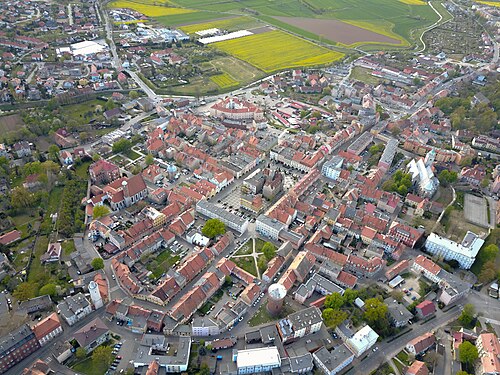
Jawor is a town located in southwestern Poland, within Lower Silesian Voivodeship. Positioned approximately 50 kilometers northwest of Wrocław, it serves as the administrative seat of the Jawor County. With a history that dates back over a thousand years, Jawor has undergone various transformations due to historical events, including periods of Bohemian, Prussian, and German rule, reflecting the intricate tapestry of Central European history. The town’s population is around 14,000 residents, contributing to its vibrant community atmosphere that combines historical heritage with contemporary life.
The town is well-known for its historical architecture and cultural landmarks. One of the most notable sites is the Church of St. Martin, a stunning example of Gothic architecture that was constructed in the 14th century. The church is famous for its wooden roof, which is among the oldest and largest of its kind in Europe. Additionally, Jawor is recognized for the Jawor Mural, a large artistic installation that celebrates the town's rich history and diverse cultural influences. The town's location in a region rich in natural beauty also provides opportunities for outdoor activities, including hiking and cycling in the surrounding countryside and the nearby Sudetes mountains.
Economically, Jawor has evolved over the years from a center of trade and craft to a mix of industrial and service-oriented enterprises. The town has various manufacturing firms that contribute to its economy, including automotive parts and furniture production. The infrastructure is well-developed, with roads and public transport connecting Jawor to major urban centers, facilitating trade and commerce. Jawor's blend of historical significance, cultural richness, and economic development makes it an essential part of Lower Silesia, reflecting both the challenges and achievements of the region throughout history.
Facts about Jawor
- Jawor is renowned for its unique wooden church, the Church of Peace, which is a UNESCO World Heritage Site and represents a remarkable example of 17th-century wooden architecture in Poland.
- The city is located in Lower Silesia, an area rich in mineral resources, and has a historical background in mining, especially during the Middle Ages.
- Jawor hosts the annual Jawor Folk Festival, which celebrates the region's cultural heritage through traditional music, dance, and crafts, attracting visitors from across Poland and beyond.
- The Jawor town square is famous for its vibrant Market Hall, which dates back to the 14th century and is an excellent representation of medieval urban planning.
- Jawor was a significant location during the Peace of Westphalia in 1648, which ended the Thirty Years' War, reflecting its historical importance in European diplomacy.
- The city's name, Jawor, means 'maple' in Polish, indicating the prevalence of maple trees in the area, contributing to the town's natural beauty.
- Jawor is home to several historic Gothic and Baroque buildings, showcasing the architectural diversity and historical evolution of the town.
- The town has connections to prominent figures in Polish history, including the political and cultural influence of the Silesian nobility during the feudal period.
- Jawor has a vibrant arts scene, with many local artists and craftsmen who continue traditional Silesian art forms, including pottery and textile art.
- The city is positioned along the scenic Bóbr River, offering picturesque landscapes and opportunities for outdoor activities such as hiking and cycling.