Jelgava, Latvia
- 61,791 people
- 12 places to visit
- 56.6511, 23.7196
Places to Visit (12)
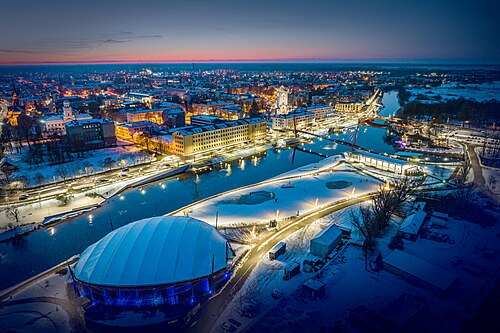
Jelgava is a city located in central Latvia, approximately 41 kilometers southwest of the capital, Riga. Known historically as Mitau, it has been an important cultural and administrative center since the medieval period. The city is situated on the banks of the Lielupe River, which has played a significant role in its development. Jelgava has a population of around 50,000 residents, making it one of the larger cities in Latvia. The city is characterized by a mix of architectural styles reflecting its rich history, including structures from the Baroque and Gothic periods, with the most notable being the Palace of the Dukes of Courland, a prime example of Baroque architecture designed by the architect Bartolomeo Rastrelli.
Historically, Jelgava was a significant center of the Duchy of Courland and Semigallia during the 16th to 18th centuries. As the capital of the duchy, it became a hub of trade, culture, and education. The city is home to several educational institutions, including the Latvia University of Agriculture, which plays a vital role in the city’s economy and modern identity. Besides education, Jelgava is noted for its vibrant cultural scene, hosting various festivals and events throughout the year. The city's strategic location and transportation links, including rail and road connections, facilitate easy access, making it a significant logistical point in Latvia. With its blend of historical significance and contemporary development, Jelgava continues to thrive as a dynamic city with a rich heritage.
Facts about Jelgava
- Jelgava was the site of the ancient Zemgale castle, which has roots dating back to the early 13th century, making it one of the historically significant locations in Latvia.
- The city hosts the Jelgava Palace, a baroque-style palace built in the 18th century, which was once the residence of the Duke of Courland and is now home to the Latvia University of Agriculture.
- Jelgava is often referred to as the 'City of Students' due to its large student population and presence of educational institutions, particularly the Latvia University of Agriculture.
- The Jelgava Christmas market is known for its unique festive atmosphere, featuring traditional Latvian arts and crafts, food, and live music, setting it apart from other holiday markets in Latvia.
- Each spring, Jelgava hosts the 'Jelgava Town Festival', a multi-day event that celebrates the city's culture, history, and community with concerts, parades, and traditional Latvian folk activities.
- The city is home to the iconic St. Anna's Church, a striking neo-Gothic structure that features one of the tallest church towers in Latvia.
- Unlike many other Latvian cities, Jelgava has a rich history in the field of agriculture, being a key agricultural hub due to favorable soil and climate conditions.
- Jelgava’s historical significance in the 18th century made it a center for the Enlightenment movement in Latvia, where many progressive ideas circulated.
- The city has a unique tradition of ice swimming, where residents participate in cold-water swimming events, highlighting its strong community spirit and resilience.
- Jelgava is known for its statue of the 'Jelgava Cat', a whimsical city symbol that signifies local pride and adds a charming element to the city's public art scene.