Jeonju, South Korea
- 652,392 people
- 17 places to visit
- 35.828, 127.116
Places to Visit (17)
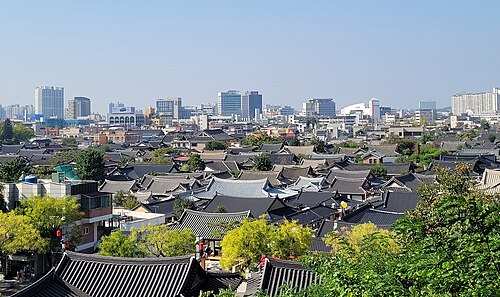
Jeonju, located in the northwestern part of South Korea's North Jeolla Province, is a city renowned for its rich history, cultural heritage, and culinary offerings. With a population of approximately 650,000, Jeonju serves as a prominent administrative and economic center. Its roots trace back to the Baekje Kingdom, which flourished from 18 BCE to 660 CE, making it a site of significant historical value. The city is home to the Jeonju Hanok Village, a well-preserved area featuring over 800 traditional hanok houses that reflect the architectural style of the Joseon Dynasty. This village attracts both domestic and international tourists, providing them with a glimpse into Korea's past through traditional crafts, tea houses, and cultural performances.
Jeonju is also celebrated as the birthplace of bibimbap, a beloved Korean dish that consists of a mixture of rice, vegetables, meat, and gochujang (red chili paste). The city's vibrant food scene includes famed local specialties such as Jeonju-style gimbap and various street foods that contribute to its reputation as a gastronomic destination. Additionally, Jeonju has made a name for itself in the realm of cinema, being designated as a UNESCO City of Gastronomy and Cultural City, which highlights its commitment to preserving cultural heritage and promoting local cuisine. The Jeonju International Film Festival, held annually, showcases independent films from around the world, further enhancing the city’s cultural profile. Overall, Jeonju stands out as a dynamic blend of history, culture, and culinary excellence, making it a significant destination in South Korea.
Facts about Jeonju
- Jeonju is famous for being the birthplace of bibimbap, a signature Korean dish that symbolizes the city’s rich culinary culture.
- The Jeonju Hanok Village preserves over 800 traditional Korean hanok houses, showcasing traditional architecture and culture, making it one of the largest preserved areas of hanok in Korea.
- Jeonju was designated a UNESCO City of Gastronomy in 2012, recognizing its unique food culture and commitment to sustainable food practices.
- The city hosts the Jeonju International Film Festival annually, which promotes independent films and is one of the oldest film festivals in South Korea.
- Jeonju is known for its vibrant street art scene, particularly in the Jeonju Mural Village, where walls are adorned with murals created by local and international artists.
- The Jeonju National Museum houses numerous artifacts and artworks that provide insight into the region's history and culture, including a significant collection of Korean ceramics.
- The city is the birthplace of the Joseon Dynasty's famous Confucian scholar Yi Hwang, also known as Toegye, who greatly influenced Korean thought and philosophy.
- Jeonju is home to the Jeondong Cathedral, a fine example of Gothic architecture in South Korea, blending both Western and Eastern architectural styles.
- The Jeonju Hanji Museum celebrates hanji, traditional Korean paper made from mulberry trees, highlighting the importance of this craft to Korean cultural heritage.
- Jeonju's vibrant traditional music and dance performances, including Pansori, a form of musical storytelling, attract tourists and cultural enthusiasts from around the globe.