Jerusalem, Israel
- 971,800 people
- 15 places to visit
- 31.7683, 35.2137
Places to Visit (15)
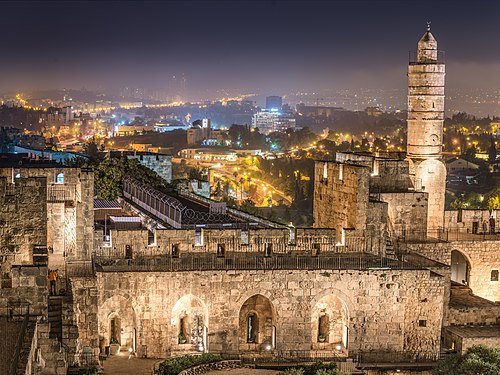
Jerusalem, one of the oldest cities in the world, holds profound religious and historical significance for Judaism, Christianity, and Islam. Situated in the Middle East, it is the capital of Israel and a central point of contention in the Israeli-Palestinian conflict. The city features a rich tapestry of cultures and religious practices, with a population of approximately 900,000 people, comprised of Jewish, Muslim, and Christian communities. The Old City of Jerusalem, a UNESCO World Heritage site, is particularly noteworthy for its religious sites, including the Western Wall, the Dome of the Rock, and the Church of the Holy Sepulchre, each representing the deep-rooted spiritual heritage of its respective faith.
Throughout its history, Jerusalem has been a focal point of political and religious struggles. It has changed hands numerous times, ruled by various empires such as the Romans, Byzantines, Ayyubids, and Ottomans, each leaving its mark on the city’s architecture and culture. After the establishment of the State of Israel in 1948, Jerusalem was divided into West Jerusalem, predominantly Jewish, and East Jerusalem, largely Arab. The Six-Day War in 1967 resulted in Israel's annexation of East Jerusalem, a move not widely recognized internationally, further complicating the peace process between Israelis and Palestinians. Today, Jerusalem is a vibrant city, bustling with life, rich in heritage, and continues to be a symbol of religious devotion and a key player in the ongoing geopolitical landscape of the region.
Facts about Jerusalem
- Jerusalem is one of the oldest cities in the world, with a history that spans over 3,000 years.
- The Western Wall, a remnant of the Second Temple, is a sacred site for Jews and one of the most visited landmarks in Israel.
- Jerusalem is holy to three major world religions: Judaism, Christianity, and Islam, making it a unique religious center.
- The city has been a focal point of religious pilgrimage for centuries, drawing millions of visitors annually.
- The Dome of the Rock, located on the Temple Mount, is an iconic symbol of Islamic architecture and is one of the oldest extant works of Islamic architecture.
- Jerusalem is governed as a municipality that encompasses both the western and eastern parts of the city, reflecting a complex political landscape.
- The Old City of Jerusalem is a UNESCO World Heritage Site, known for its historical and cultural significance.
- The city serves as the capital of Israel, which is a point of international contention and debate.
- Jerusalem's population is diverse, comprising Jews, Muslims, and Christians, contributing to a rich cultural mosaic.
- The Israel Museum in Jerusalem houses an extensive collection of art and archaeology, including the Dead Sea Scrolls.