Jiangmen, China
- 1,795,459 people
- 7 places to visit
- 22.5786, 113.0816
Places to Visit (7)
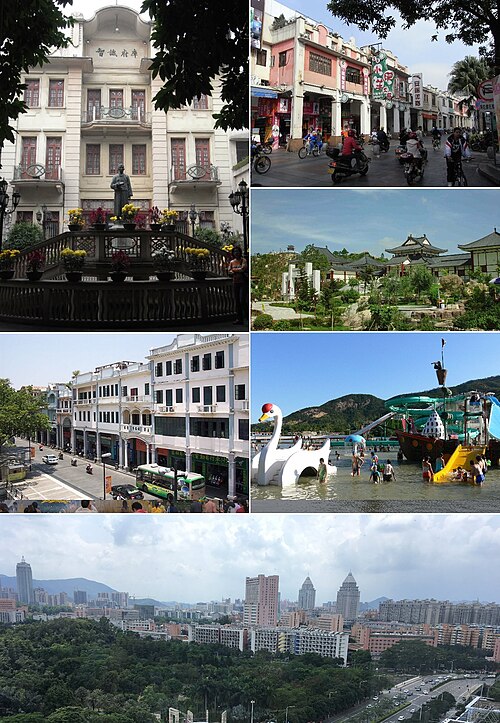
Jiangmen is a city located in the Guangdong Province of southern China, situated about 100 kilometers southwest of Guangzhou. Known for its rich cultural heritage and economic vitality, Jiangmen has evolved from a traditional agricultural hub into an important industrial city. Historically, it was a vital port for maritime trade and emigration, especially during the 19th and early 20th centuries when many residents emigrated to countries such as the United States, Canada, and Australia. This wave of emigration has woven a unique cultural tapestry, contributing to Jiangmen's identity as a place where Chinese traditions meet Western influences.
Jiangmen spans a land area of approximately 9,751 square kilometers and has a population of around 4.5 million. It is strategically positioned along the Pearl River Delta, benefiting from access to significant waterways that facilitate trade and transportation. The local economy is diverse, with strong sectors in manufacturing, agriculture, and services. Industrial activity is dominated by the production of textiles, electronics, and machinery. Additionally, Jiangmen is recognized for its agriculture, particularly in rice, fruits, and vegetables, owing to its fertile land and favorable climate. The city has seen significant infrastructure development in recent years, leading to improved connectivity, including better roads, railways, and local airports.
Culturally, Jiangmen is famous for its historical sites, including the Kaiping Diaolou, a UNESCO World Heritage Site consisting of traditional watchtowers that reflect the integration of Chinese and Western architectural styles. Jiangmen is also home to various temples, parks, and scenic areas that attract visitors and locals alike. The city celebrates multiple festivals throughout the year, showcasing its rich traditions and community spirit, including the Chinese New Year and the Dragon Boat Festival. Jiangmen’s vibrant economy, cultural heritage, and its scenic landscapes make it an increasingly significant city in both Guangdong Province and China as a whole.
Facts about Jiangmen
- Jiangmen is known as the 'Hometown of Overseas Chinese' due to its large population of Chinese expatriates and their descendants living abroad.
- The city is home to the famous Chen Clan Ancestral Hall, a stunning example of traditional Southern Chinese architecture and craftsmanship.
- Jiangmen has one of the largest and most well-preserved collections of ancient pagodas in China, including the iconic Baishuidai Ancient Village.
- The city is recognized for its scenic landscapes, particularly the unique combination of rivers and traditional Lingnan architecture, earning it the nickname 'the Water City of Guangdong.'
- Jiangmen is the birthplace of the Chinese martial art Wing Chun, which was popularized by the famous martial artist Bruce Lee.
- The city hosts the Jiangmen International Kite Festival annually, celebrating kite flying alongside cultural performances and exhibitions.
- Jiangmen played a significant role in the early development of China's industrial sector during the late 19th century, with many factories and enterprises established during this period.
- The nearby Kaiping Diaolou, a UNESCO World Heritage Site, showcases a unique blend of Western and Chinese architectural styles, reflecting the influence of overseas Chinese returning home.
- Jiangmen is known for its rich culinary traditions, particularly its seafood dishes and the specialty soup known as 'Hakka-style pig's feet soup.'
- The city has a significant ecological focus, hosting multiple parks and nature reserves, including the Nanhua Mountain Scenic Area, known for its biodiversity and natural beauty.