Jiuquan, China
- 428,346 people
- 2 places to visit
- 39.7325, 98.4939
Places to Visit (2)
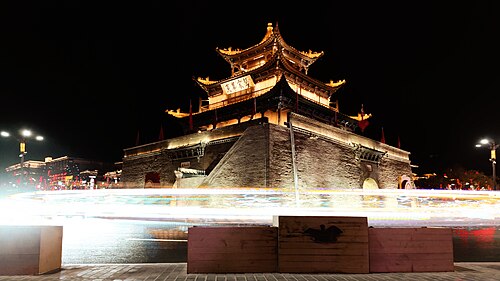
Jiuquan is a city located in the northwestern part of China, within Gansu Province. It is situated at the edge of the Gobi Desert and acts as a vital transportation hub, connecting various regions like Gansu, Inner Mongolia, and Xinjiang. The city has a rich history, dating back to its establishment during the Han Dynasty around 121 BC as part of a strategic military outpost. Historically known for its Silk Road significance, it facilitated trade and cultural exchange between East and West. Jiuquan is characterized by its unique blend of natural landscapes, which include mountains, deserts, and rivers, offering a diverse environment that supports both agriculture and tourism.
Economically, Jiuquan has undergone significant transformation in recent decades. It has developed into an important center for various industries, including renewable energy, aerospace, and agriculture. The Jiuquan Satellite Launch Center, one of China’s primary space launch facilities, has further elevated the city’s profile on the global stage, contributing to advancements in space technology and research. Agriculture remains an essential sector, with the region known for its production of crops such as wheat, corn, and cotton. Cultural heritage is another defining aspect of Jiuquan, with numerous historical sites reflecting its long-standing traditions and customs. These include ancient temples, historical relics from the Silk Road, and vibrant local festivals that celebrate the diverse cultural tapestry of the area.
Despite its rich history and development, Jiuquan faces challenges typical of rapidly growing urban areas, such as environmental issues and the need for sustainable development. Nevertheless, the city continues to grow economically while preserving its cultural heritage, making it a unique destination that bridges China’s past with its future ambitions. The combination of its strategic location, industrial growth, and cultural diversity positions Jiuquan as a key player in China’s ongoing development, contributing to both the regional economy and the broader national narrative.
Facts about Jiuquan
- Jiuquan is known as the 'City of Jiuquan' which translates to 'Wine Spring,' derived from its historical significance in wine production, especially during the Tang Dynasty.
- The city is home to the Jiuquan Satellite Launch Center, one of China's primary launch sites for space missions, making it a hub for China's space exploration efforts.
- Jiuquan is located in the northwestern part of Gansu Province and serves as a gateway to the ancient Silk Road, contributing to its rich cultural heritage.
- The city features the unique Jiuquan Confucian Temple, which is one of the few remaining temples dedicated to Confucianism in the region, showcasing traditional architecture and cultural significance.
- Jiuquan is known for its beautiful landscapes, particularly the nearby Dunhuang, which features the Mogao Caves, a UNESCO World Heritage site famous for its ancient Buddhist art.
- The area around Jiuquan also includes the 'Jiuquan Grassland,' a scenic location that reflects its geographical diversity and natural beauty, and it's popular for outdoor activities.
- Jiuquan's annual International Oasis Music Festival attracts artists and musicians from all over the world, promoting cultural exchange and tourism in the region.
- The city is recognized for its efforts in environmental sustainability, particularly in desert reclamation projects that aim to restore its ecological balance.
- Historically, Jiuquan was a critical military outpost during the Ming and Qing Dynasties, which influenced its development and strategic importance in the region.
- Jiuquan has a notable local cuisine, including its famous Jiuquan roasted duck, which is renowned in Gansu Province for its unique preparation and flavor.