Johannesburg, South Africa
- 5,635,127 people
- 12 places to visit
- -26.2056, 28.0337
Places to Visit (12)
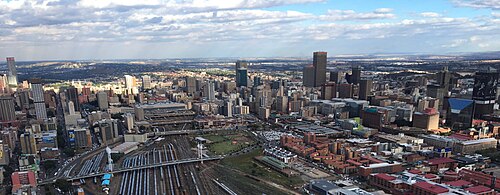
Johannesburg, often referred to as Jozi or Joburg, is the largest city in South Africa and one of the 50 largest metropolitan areas in the world. It is situated in the northeastern part of the country and serves as the economic and financial hub of South Africa. Founded in 1886 after the discovery of gold in the Witwatersrand region, Johannesburg experienced rapid growth fueled by gold mining, attracting a diverse population. Today, it is a vibrant city known for its rich cultural landscape, including museums, galleries, and theaters that reflect the complexities of South Africa’s history.
The city is characterized by its unique geographic location, sitting on the highveld plateau at an altitude of approximately 1,753 meters (5,751 feet) above sea level. Johannesburg boasts a subtropical highland climate, resulting in warm summers and mild winters, making it a desirable place to live and visit. The city's economy is diverse, with sectors such as finance, manufacturing, technology, and tourism playing significant roles. Notable landmarks include the Apartheid Museum, which educates visitors about the country's past, the vibrant neighborhood of Soweto, which was a focal point during the anti-apartheid movement, and the iconic Nelson Mandela Square.
Johannesburg is also known for its extensive urban parklands, interspersed with residential and commercial areas, which contribute to its green cityscape. The city has made strides in modern infrastructure, with an evolving public transport system that includes the Gautrain, a high-speed train linking Johannesburg with Pretoria and O.R. Tambo International Airport. Despite its rapid urbanization and associated challenges, such as economic inequality and crime, Johannesburg remains a city of opportunity, attracting entrepreneurs and artists alike. With its dynamic atmosphere, cultural diversity, and blend of tradition and modernity, Johannesburg stands as a testament to South Africa’s resilience and spirit.
Facts about Johannesburg
- Johannesburg is the largest city in South Africa and one of the 50 largest urban areas in the world.
- It is famous for being the economic powerhouse of South Africa, contributing over 16% to the country's GDP.
- Johannesburg was founded in 1886 following the discovery of gold, which led to a massive gold rush and the city's rapid growth.
- The city is home to the Apartheid Museum, which provides an in-depth look at the history of apartheid and the struggle for freedom in South Africa.
- Johannesburg boasts the largest man-made forest in the world, with over 10 million trees planted throughout the city.
- The Maboneng Precinct in Johannesburg is an urban renewal project that has transformed a once-declining area into a thriving hub for arts, culture, and retail.
- Johannesburg is home to the largest international airport in Africa, OR Tambo International Airport, serving as a major gateway for travel to and from the continent.
- The city is also known for its vibrant street art scene, with numerous murals and installations dotted throughout the urban landscape.
- Johannesburg has one of the highest populations of expats in South Africa, making it a melting pot of cultures and ethnicities.
- The Cradle of Humankind, a UNESCO World Heritage site located just outside Johannesburg, is one of the richest hominid fossil sites in the world.