Jülich, Germany
- 33,911 people
- 12 places to visit
- 50.9224, 6.3639
Places to Visit (12)
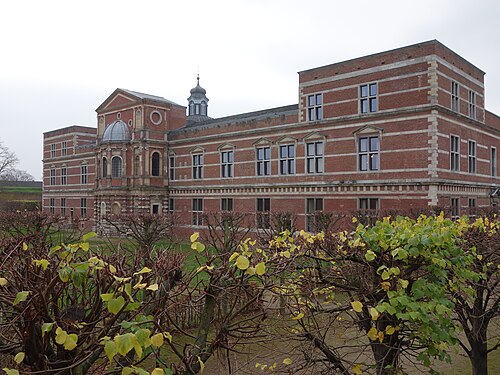
Jülich is a small, historic city located in North Rhine-Westphalia, Germany, approximately 30 kilometers northwest of Cologne. With a population of around 33,000 residents, Jülich is known for its rich academic heritage, significant historical landmarks, and beautiful parks. The city's name is derived from the Latin "Julichium," attributed to its origins dating back to the Roman Empire. In the medieval period, Jülich became prominent as the seat of the Duchy of Jülich, leading to its development as a center of trade and culture. The city was heavily fortified in the 16th and 17th centuries, which is evidenced by the remnants of its impressive fortifications, although many were dismantled in the 19th century.
One of Jülich's most notable landmarks is the Jülich Citadel, a vast fortress constructed between 1545 and 1715, showcasing Renaissance military architecture. The citadel now hosts various events and houses gardens that attract both residents and tourists. Another significant site is the St. Mary's Church (Sankt Marien), a striking example of Gothic architecture that dates back to the 13th century. Jülich is also home to the Forschungszentrum Jülich, one of Europe’s largest research centers, focusing on various fields, including energy, information technology, and health. The center contributes significantly to the academic standing of the city, often collaborating with universities and research institutions across Germany and abroad.
The city's blend of historical richness and modern scientific advancement creates a unique atmosphere for both residents and visitors. Jülich's charming streets, framed by historical buildings and extensive green spaces, offer a pleasant environment for outdoor activities and community events. The city's location provides easy access to the industrial heart of the Ruhr area as well as the scenic beauty of the nearby Eifel region. Events such as the annual Jülicher Karneval and Christmas markets embody the city's vibrant cultural life, contributing to a strong sense of community and local pride. Overall, Jülich serves as a notable example of a city where history and innovation coexist, making it an intriguing destination for those exploring the cultural landscape of Germany.
Facts about Jülich
- Jülich is known for its historical significance as the site of the Jülich War, a conflict in the 16th century that involved major European powers.
- The city is home to the famous Jülich Citadel, an impressive star-shaped fortress dating back to the early 17th century, which is unique in its design and historical purpose.
- Jülich hosts the Forschungszentrum Jülich, one of the largest research centers in Europe, specializing in energy and brain research, making it an important hub for scientific advancement.
- The city celebrates a vibrant annual event known as the Jülicher Schützenfest, where traditional shooting events and parades showcase local heritage and community spirit.
- Jülich's historic town center features the St. Ursula Church, famous for its beautiful Baroque architecture and a significant example of the city's rich history.
- Jülich is recognized as the birthplace of the renowned mathematician and physicist John von Neumann, contributing to its identity as a center of intellectual achievement.
- The town is uniquely characterized by its location at the confluence of the Rur and Wurm rivers, providing scenic landscapes and recreational opportunities uncommon in many German cities.
- Jülich has a unique festival called 'Lichterfest' where thousands of lights illuminate the city, creating a magical atmosphere that attracts visitors each year.
- The city is part of the 'Region Köln/Bonn' which is recognized for its diverse cultural offerings, from music and art to gastronomy, setting it apart from many other German towns.
- Jülich's botanical garden, located near the research center, showcases a variety of plants and serves as a vital educational resource on ecological sustainability.