Juiz de Fora, Brazil
- 573,285 people
- 13 places to visit
- -21.7624, -43.3435
Places to Visit (13)
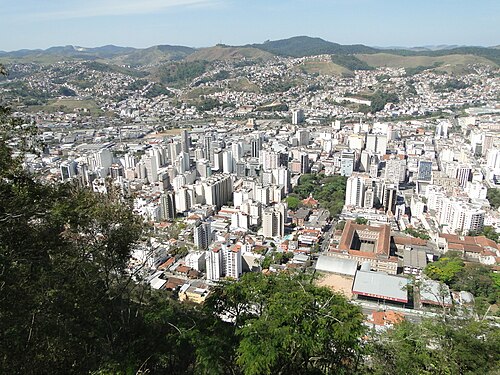
Juiz de Fora is a prominent city located in the southeastern region of Brazil, within the state of Minas Gerais. Established in 1850, the city has grown to become an important economic, educational, and cultural hub. Historically, its founding was largely influenced by the location's strategic advantages, situated between Rio de Janeiro and Belo Horizonte, making it a key transit point. Today, Juiz de Fora boasts a diverse population of over 500,000 residents, making it the second-largest municipality in Minas Gerais. The city is known for its rich history and architectural heritage, featuring a mix of colonial and modern structures. Notable landmarks include the São Pedro Cathedral and the Palace of the Town Hall, both reflecting the city’s historical significance.
Economically, Juiz de Fora has a diverse base, predominantly driven by sectors such as services, commerce, and manufacturing. The city hosts a range of industries, including textiles, food processing, and furniture production. Additionally, the presence of several universities and educational institutions, such as the Federal University of Juiz de Fora (UFJF), contributes to its reputation as an academic center in Brazil. The university attracts students from across the country, enhancing the city's cultural vibe and fostering innovation and research. Beyond education, Juiz de Fora is known for its vibrant cultural scene, featuring numerous festivals, art galleries, and theaters. The city's location in the Minas Gerais Highlands also provides opportunities for outdoor activities, including hiking and ecotourism, particularly in the surrounding mountainous landscapes. Overall, Juiz de Fora stands out as a dynamic city that combines historical richness with modern development, making it an intriguing place to live and visit.
Facts about Juiz de Fora
- Juiz de Fora is known for its rich cultural heritage, being a major center for music, particularly classical music, and hosting the prestigious 'Festival Internacional de Inverno' (International Winter Festival).
- The city is home to one of Brazil's earliest and most renowned railway systems, with the Estrada de Ferro Leopoldina Railway playing a pivotal role in its economic development in the late 19th century.
- Juiz de Fora has a significant historical landmark, the 'Catedral Metropolitana de Juiz de Fora,' which showcases a blend of Gothic and modern architectural styles and stands as a centerpiece of the city.
- It is recognized for being a hub of higher education, housing several prominent universities, including Universidade Federal de Juiz de Fora (UFJF), which is among the oldest and most respected in the country.
- The city hosts the famous 'Guerra dos Municípios' (War of Municipalities), a unique annual event that re-enacts a historic rivalry between local neighborhoods, adding to its cultural vibrancy.
- Juiz de Fora played a notable role in the Brazilian coffee trade in the 19th century and became a significant player in the national economy during this period.
- The 'Parque da Lajinha' is a prominent natural park in Juiz de Fora, featuring lush greenery and local wildlife, providing a stark contrast to the urban environment.
- Juiz de Fora is recognized for its distinctive architectural style, marked by a mix of colonial and modern buildings, giving it a unique cityscape compared to other Brazilian towns.
- The city has a strong presence of influential cultural movements and was a birthplace of important Brazilian artists and intellectuals, contributing significantly to the country’s arts and literature.
- Juiz de Fora is notably positioned between major Brazilian cities like Rio de Janeiro and Belo Horizonte, making it a strategic and attractive location for trade and tourism.