Juliaca, Peru
- 245,675 people
- 7 places to visit
- -15.4997, -70.1297
Places to Visit (7)
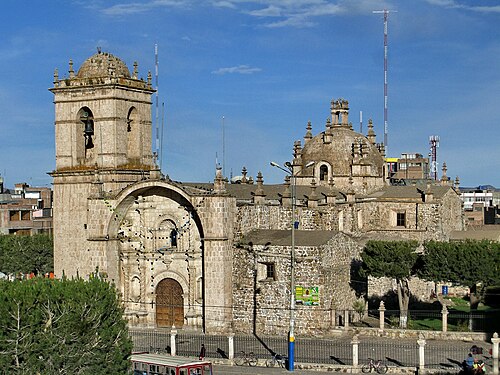
Juliaca is a vibrant city located in the Puno Region of southeastern Peru, sitting at an elevation of approximately 3,825 meters (12,500 feet) above sea level. It is the capital of the San Román Province and serves as a crucial economic hub for the surrounding area, primarily due to its strategic position near Lake Titicaca, the highest navigable lake in the world. With a population of around 250,000 residents, Juliaca boasts diverse cultural influences, primarily stemming from indigenous Quechua and Aymara communities. The city is known for its bustling markets, particularly the famous Mercado Central, where visitors can find a variety of products ranging from traditional Andean textiles to local gastronomic delights.
Economically, Juliaca is characterized by commerce and trade, as it is a significant transit point for goods moving between Bolivia and Peru. The city's economy thrives on various sectors, including agriculture, textile production, and services. Juliaca's infrastructure has developed over the years, and it features an array of transport options, including the Inca Manco Cápac International Airport, which connects the city to major Peruvian cities. However, despite its rapid growth and economic opportunities, Juliaca faces challenges such as urbanization pressures, poverty, and inadequate infrastructure in some areas. The city is also a gateway for tourists visiting the magnetic Lake Titicaca and other attractions in the region, including the historical site of Sillustani, known for its pre-Columbian funerary towers. As such, Juliaca represents a blend of cultural richness and economic vitality, contributing to its importance in the Andean region of Peru.
Facts about Juliaca
- Juliaca is known as the 'Capital of the Altiplano' and is the largest city in the Puno Region, situated at an altitude of approximately 3,825 meters (12,500 feet) above sea level.
- Unlike many other cities in Peru, Juliaca's economy is heavily centered around commerce and trade, known for its bustling markets, especially the Feria del Altiplano, which sells a wide variety of goods.
- Juliaca is home to the unique 'Juliaca Train Station', which is one of the highest in the world, connecting travelers to the famous tourist destination of Machu Picchu via Cuzco.
- The city has the distinctive characteristic of having a large percentage of its population engaged in informal commerce, reflecting a vibrant culture of entrepreneurship.
- Juliaca features the 'Cristo Blanco' statue, a landmark that stands over 14 meters high and offers panoramic views of the surrounding area, serving as a significant reference point in the city.
- The city hosts the Festividad de la Virgen de la Candelaria, one of the most important celebrations in the region, attracting thousands of participants and showcasing a blend of Indigenous and Catholic traditions.
- Juliaca is known for its unique architectural style, which includes a mix of colonial structures and modern buildings, distinct from many other historic cities in Peru.
- It is recognized for its harsh climate, with significant temperature fluctuations between day and night, making it one of the colder cities in the region despite its proximity to the equator.
- The city serves as a major transportation hub in southern Peru, facilitating travel to nearby tourist hotspots such as Lake Titicaca and the Andean mountains.
- Juliaca's residents, known as 'Juliacinos', are known for their colorful traditional clothing and distinct cultural practices, reflecting a rich cultural heritage that stands out in the region.