Kabul, Afghanistan
- 4,434,550 people
- 14 places to visit
- 34.5554, 69.2075
Places to Visit (14)
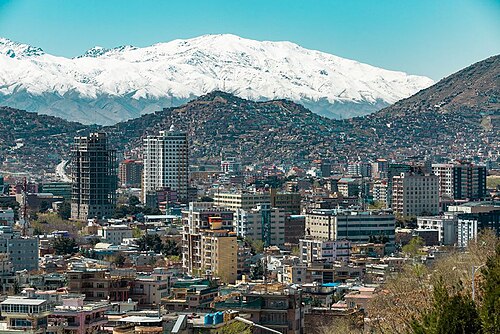
Kabul, the capital city of Afghanistan, is one of the oldest cities in the world, with history dating back over 3,500 years. Situated in the eastern part of the country, at an altitude of approximately 1,790 meters (5,869 feet) above sea level, Kabul is located in a valley surrounded by the towering peaks of the Hindu Kush mountains. This geographical position has historically made it a vital trade route and a meeting point for various cultures and civilizations, from the Achaemenid Empire to the Great Game between the British and Russian empires. Today, Kabul is home to a diverse population exceeding 4 million people, comprising various ethnic groups, including Pashtuns, Tajiks, Hazaras, and Uzbeks.
The city has undergone significant transformations over the decades, particularly in the wake of political upheaval, foreign invasions, and civil war. In recent years, Kabul has seen a surge in infrastructure development, with new roads, schools, and health facilities being constructed to support the growing population and to improve the quality of life. Despite these advancements, the city faces numerous challenges, including ongoing security concerns, poverty, and limited access to basic services. The cultural heritage of Kabul is rich, featuring historic landmarks such as the Bala Hissar fortress, the Gardens of Babur, and the iconic Kabul Museum, which highlight the city's importance as a cultural hub in the region.
In recent years, particularly following the return of the Taliban to power in August 2021, Kabul has once again become a focal point for international attention. The political changes have initiated a range of concerns regarding human rights, women's rights, and the general stability of the city and the country as a whole. While some efforts are being made to restore order and governance, challenges persist in the provision of humanitarian aid and the establishment of a stable political environment. Kabul remains a city of complexity, where ancient history intersects with the struggles of contemporary Afghan society, and its future continues to be uncertain amidst regional and global dynamics.
Facts about Kabul
- Kabul is the capital and largest city of Afghanistan, serving as the political, cultural, and economic center of the country.
- The city has a history that spans over 3,500 years, making it one of the oldest continuously inhabited cities in the world.
- Kabul is situated at an altitude of approximately 1,800 meters (5,900 feet) in the Hindu Kush mountain range, giving it a unique geographic setting.
- The Bala Hissar fortress, which dates back to the 5th century, has served as a royal palace and a military fortification, reflecting Kabul's historical significance.
- Kabul's population is a diverse mix of ethnic groups, including Pashtuns, Tajiks, Hazaras, and Uzbeks, contributing to its rich cultural tapestry.
- The famous Gardens of Babur, the final resting place of the Mughal Emperor Babur, are located in Kabul and highlight the city's historical connection to the Mughal Empire.
- Kabul was a key stop on the ancient Silk Road, connecting trade routes between Central Asia and the Indian subcontinent.
- Despite recent conflicts, Kabul has been the site of significant cultural events, including art exhibitions, film festivals, and music concerts that promote Afghan culture.
- The city has several notable institutions of higher education, contributing to its role as a center of learning and development in Afghanistan.
- Kabul is also home to numerous bazaars, such as the sprawling Chicken Street, which is famous for its handicrafts, carpets, and local Afghan goods.