Kairouan, Tunisia
- 119,794 people
- 9 places to visit
- 35.6712, 10.1005
Places to Visit (9)
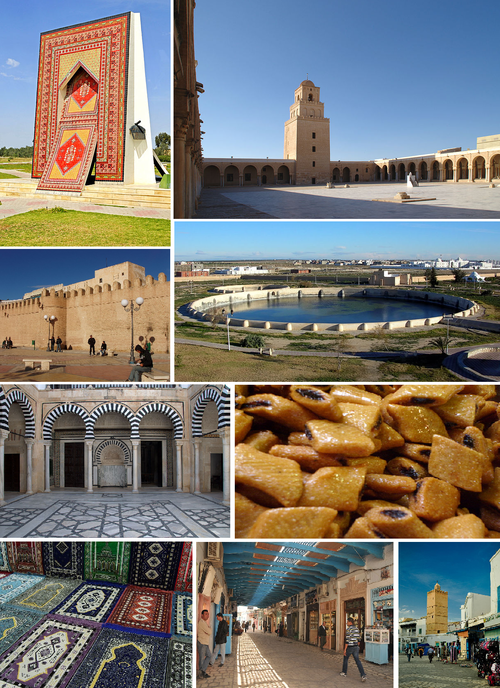
Kairouan, a city located in central Tunisia, is one of the oldest cities in the Muslim world and a UNESCO World Heritage Site since 1988. Founded in 670 CE by the Arab general Uqba ibn Nafi, Kairouan became a prominent religious and cultural center and is often regarded as the fourth holiest city in Islam, following Mecca, Medina, and Jerusalem. The city's strategic location on trade routes facilitated its growth, attracting scholars, poets, and traders from across the Islamic world. Its historical significance is underscored by its many architectural treasures, including the Great Mosque of Kairouan, a masterpiece of Islamic architecture built in the 9th century. The mosque is notable for its imposing rectangular courtyard, ornate brickwork, and a minaret that reflects the early development of Islamic architecture.
The urban layout of Kairouan presents a fascinating blend of history and tradition. The medina, or old town, is a maze of narrow streets characterized by colorful souks, traditional houses, and ancient monuments. Here, visitors can explore several historical sites, including the Aghlabid Basins, an impressive system of water reservoirs built in the 9th century to supply the city, which demonstrates the ingenuity of early Islamic engineering. The city's religious significance is reinforced by annual pilgrimages, with many Muslims undertaking the journey to Kairouan to pray at its sacred sites. Kairouan is also famous for its rich artisanal heritage, particularly its carpets and textiles, which are highly valued for their craftsmanship. The local cuisine, influenced by Tunisian and Mediterranean flavors, adds another dimension to Kairouan's cultural identity, with dishes that reflect the traditions of the region.
Today, Kairouan remains a vital cultural hub, balancing its historical legacy with modern developments. The city's enduring importance lies in its role as a center for Islamic learning and spirituality, attracting tourists and researchers alike. Efforts to preserve its rich history continue, ensuring that Kairouan remains a significant part of Tunisia's heritage and a testament to the vibrant Islamic culture that flourished in North Africa.
Facts about Kairouan
- Kairouan is considered the fourth holiest city in Islam, after Mecca, Medina, and Jerusalem.
- The Great Mosque of Kairouan, founded in 670 AD, is one of the oldest places of worship in the Muslim world and a UNESCO World Heritage Site.
- Kairouan is known as the 'City of a Thousand Mosques' due to its rich Islamic architectural heritage.
- The city is famous for its artisanal production of carpets, particularly the Kairouan carpet, which is renowned for its quality and craftsmanship.
- Kairouan was the capital of Tunisia during the Aghlabid dynasty (9th to 10th centuries), playing a crucial role in the region's cultural and economic development.
- The annual Kairouan's International Carpet Festival attracts artisans and visitors from around the world to celebrate carpet weaving traditions.
- Kairouan's medina, or old town, is characterized by narrow alleyways and traditional whitewashed buildings, showcasing the city's historical architecture.
- The city is the birthplace of several important Islamic scholars and has been a center of learning throughout history.
- Kairouan has unique culinary traditions, including the celebrated 'makroud', a semolina-based pastry often filled with dates or nuts, reflecting the city's gastronomic heritage.
- Every year, Kairouan hosts the festival of 'Mouloud' to celebrate the birth of the Prophet Muhammad, drawing pilgrims and visitors from across the region.