Karaman, Turkey
- 175,390 people
- 7 places to visit
- 37.181, 33.2222
Places to Visit (7)
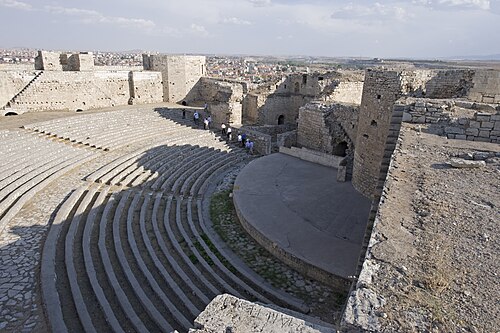
Karaman is a city located in the Central Anatolia region of Turkey, serving as the administrative center of Karaman Province. With a current population of approximately 200,000, Karaman is known for its historical significance and cultural heritage. The city’s rich history can be traced back to ancient times, with evidence of settlements dating to the Hittite period. Throughout its history, Karaman has been ruled by various civilizations, including the Romans and Byzantines, before becoming a significant center for the Seljuk Turks and later the Ottoman Empire. The city is particularly famous for its unique contribution to the Turkish language, as it was here that the poet and scholar Karamanoglu Mehmet Bey declared Turkish as the official language, emphasizing its cultural importance.
Modern Karaman is an economic hub, primarily benefiting from agriculture, livestock breeding, and trade. The city's fertile plains allow for the cultivation of crops such as wheat, barley, and various fruits and vegetables. Additionally, Karaman has seen infrastructural development, enhancing transportation and communication networks that connect it to major cities like Konya and Aksaray. The city's economy has also diversified into manufacturing, with industries focusing on textiles, food processing, and ceramics. Cultural and educational institutions play a pivotal role in the community, with several schools, a university, and cultural organizations that focus on promoting Karaman's rich traditions, including folklore and music.
Tourism in Karaman is also gaining traction, as visitors are drawn to its historical landmarks, such as the Karaman Castle, the underground city of Silahtaroglu, and the numerous mosques and churches that testify to its diverse heritage. The city hosts a number of annual festivals and events that celebrate traditional customs and attract both locals and tourists. The surrounding natural landscapes offer opportunities for outdoor activities, making Karaman an appealing destination for those interested in both history and nature. Overall, Karaman is a city that beautifully blends its rich past with modern developments, embodying the essence of Turkish culture and identity.
Facts about Karaman
- Karaman was once the capital of the Karamanid Dynasty, a Turkish state that existed from the 13th to the 15th centuries, making it a significant center of Turkish identity and culture.
- The city is home to the historic Karaman Castle, which dates back to the Byzantine period and was later expanded by the Seljuks and Ottomans, offering a unique blend of architectural influences.
- Karaman is known for its unique dialect of Turkish, which includes many words borrowed from Persian and Arabic, reflecting its historical significance as a cultural crossroads.
- The town is famous for its production of the 'Karaman Sözlüğü', a dictionary that preserves local dialects and vocabulary, and is considered an important resource for cultural preservation.
- Karaman hosts the annual Karaman International Agricultural Fair, which promotes local agriculture and provides a platform for farmers and producers to showcase their products.
- The region is known for its rich history of Turkish folk music, and it celebrates this heritage through various local music festivals and events throughout the year.
- Karaman is home to the Mevlana Museum, which celebrates the life and teachings of Rumi, who had ties to the region and is a key figure in Sufi literature.
- The city has a long tradition of carpet weaving, producing unique carpets that often feature geometric patterns and vibrant colors, reflecting the culture and artistry of the area.
- Karaman was one of the first places in Turkey where Turkish was officially adopted in place of Arabic, marking a significant shift in the linguistic history of the region.
- The Karaman region is known for its unique cuisine, especially dishes like 'Tirit' and 'Yufka', which are distinct from the more commonly known Turkish dishes found in other parts of the country.