Kaunas, Lithuania
- 289,380 people
- 16 places to visit
- 54.8985, 23.9036
Places to Visit (16)
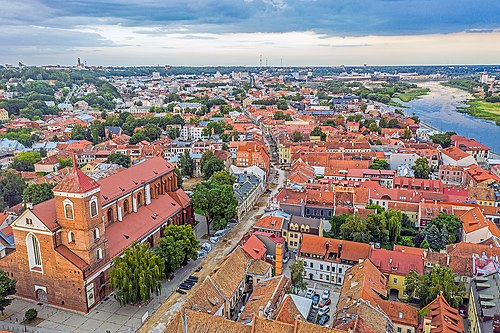
Kaunas, the second-largest city in Lithuania, is located at the confluence of the Nemunas and Neris rivers. With a population of approximately 290,000, it serves as a significant cultural, educational, and economic hub for the country. The city has a rich history, dating back to the 13th century, when it was established as a medieval fort, and has since evolved into a center of trade and education. Kaunas was an important city during the interwar period and briefly served as the capital of Lithuania from 1920 to 1939. Its architectural landscape reflects this history, prominently featuring a mix of Gothic, Renaissance, and modernist styles, with notable buildings such as the Kaunas Castle and the modernist architecture of the interwar era.
The city is renowned for its vibrant cultural scene, hosting numerous festivals, art exhibitions, and performances throughout the year. The Kaunas Jazz Festival and the Kaunas Biennial are among the most prominent cultural events, attracting both local and international artists. Moreover, Kaunas is home to several museums, including the M.K. Čiurlionis National Art Museum, dedicated to the works of Lithuania's renowned composer and painter, and the Ninth Fort, a memorial complex that honors the victims of the Holocaust and World War II. The city is also recognized for its educational institutions, most notably Vytautas Magnus University, enriching the intellectual landscape of the region.
In 2022, Kaunas was designated a European Capital of Culture, which further spotlighted its artistic endeavors and historical significance. Initiatives aimed at revitalizing urban spaces and promoting cultural heritage have since gained momentum, transforming the city into a dynamic and attractive destination for tourists and locals alike. Emphasizing sustainability and innovation, Kaunas continues to forge a path toward becoming an important player in the Baltic region and beyond, while embracing its past and celebrating its future.
Facts about Kaunas
- Kaunas served as the temporary capital of Lithuania from 1919 to 1939, particularly during the interwar period when the main city, Vilnius, was under Polish control.
- The city's architecture features a significant number of modernist buildings, leading to Kaunas being recognized as the European Capital of Culture 2022, highlighting its unique architectural heritage.
- Kaunas hosts the unique Pažaislis Monastery, one of the most significant Baroque architectural complexes in Lithuania, which features beautiful frescoes and a stunning setting by the Kaunas Reservoir.
- The Ninth Fort in Kaunas is a historical fortification that serves as a museum and memorial, commemorating the victims of the Holocaust and showcasing the city's complex history during World War II.
- Kaunas is home to the Maironis Museum of Lithuanian Literature, dedicated to the life and works of one of Lithuania’s most famous poets, who significantly influenced Lithuanian culture and identity.
- The city has a vibrant street art scene, with artistic murals adorning various buildings, particularly in the Laisvės Alėja area, distinguishing it from other more traditional Lithuanian cities.
- Kaunas has been an important center for education, hosting Vytautas Magnus University, which is well-known for its international programs and diverse student body.
- The municipality of Kaunas is known for its active promotion of technology and innovation, with the city being recognized as a hub for startups and technology companies in Lithuania.
- Kaunas hosts the annual 'Kaunas Jazz' festival, which attracts international talent and showcases various jazz styles, marking it as a significant cultural event in Lithuania.
- The city is famous for its rich variety of cafes and restaurants, with the unique tradition of 'Kaunastic' coffee culture offering insights into local tastes and social life.