Kenema, Sierra Leone
- 143,137 people
- 4 places to visit
- 7.8632, -11.1957
Places to Visit (4)
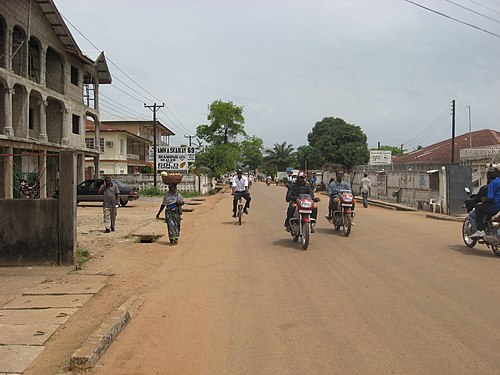
Kenema is a prominent city situated in the Eastern Province of Sierra Leone, functioning as the capital of the Kenema District. It lies approximately 250 kilometers east of the country's capital, Freetown. Kenema serves as a vital economic and administrative hub, characterized by its lush landscapes and diverse cultural heritage. The city is strategically positioned along the main road that connects the southern and eastern regions of Sierra Leone, facilitating trade and transport. With a population of around 130,000 residents, it is known for its vibrant markets, local craftsmanship, and rich history, particularly in the field of diamond mining.
Economically, Kenema is closely associated with the diamond trade, which has been a significant source of income and employment for its residents. The city has historically been linked to both legal and illegal diamond mining, which has shaped its economy and social structure over the years. However, the diamond industry's impact has also brought challenges, including issues related to governance and resource management. In addition to diamonds, Kenema's economy is supported by agriculture, with crops such as rice, cassava, and palm oil being cultivated in the surrounding areas. The city's infrastructural development is gradually improving, aided by national and international efforts, particularly in the wake of the civil war that affected Sierra Leone from 1991 to 2002.
Culturally, Kenema is home to various ethnic groups, including the Mende, Kono, and Temne, contributing to a rich tapestry of traditional customs and languages. This diversity is reflected in the city's festivals, folk music, and dance, which play an essential role in community life. Educational institutions, like the Kenema Government Secondary School and various primary facilities, are integral to fostering learning and development in the area. Additionally, Kenema has gained recognition for its role in promoting health initiatives, including programs aimed at combating diseases such as Ebola during the outbreaks in West Africa. The city continues to evolve, balancing its historical significance in mining with aspirations for economic diversification and social progress.
Facts about Kenema
- Kenema is known as the 'Eastern Province Capital' of Sierra Leone, serving as a major administrative and commercial hub in the eastern region.
- The city is particularly noted for its role in the diamond trade and was historically impacted by the Sierra Leone Civil War over control of diamond resources.
- Kenema is home to the famous Njala University, which is known for its agriculture and environmental studies programs.
- The city hosts the Kenema District Council, which plays a crucial role in local governance and development initiatives in the region.
- Kenema is one of the largest towns in Sierra Leone and is recognized for its diverse ethnic groups, including the Mende, Kono, and Limba people.
- The town is a center for the artisanal diamond mining industry, contributing significantly to the local economy and providing livelihoods for many residents.
- Kenema is famous for its vibrant cultural festivals, including the 'Kandeh' Festival, which showcases traditional music, dance, and folklore.
- The region around Kenema is rich in natural resources, including fertile agricultural land and a variety of minerals, making it a focal point for both agriculture and mining.
- Kenema is known for its ecological significance, with nearby national parks and protected areas that are home to diverse wildlife and forests.
- The city has emerged as a focal point for healthcare improvement initiatives, especially in response to the Ebola outbreak in West Africa in 2014, leading to advancements in local health infrastructure.