Kherson, Ukraine
- 283,649 people
- 6 places to visit
- 46.6354, 32.6169
Places to Visit (6)
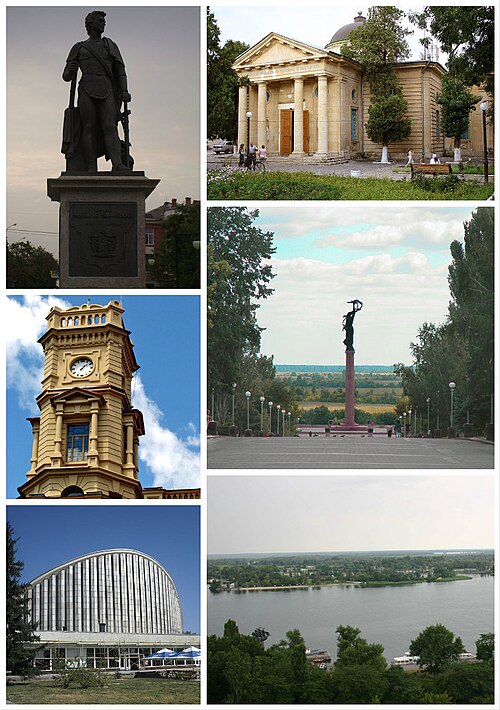
Kherson, a city located in southern Ukraine, serves as the administrative center of the Kherson Oblast. Founded in 1778 by Grigory Potemkin, it was established as a fortress to protect the southern borders of the Russian Empire and to serve as a naval base on the Black Sea. The city lies at the confluence of the Dnieper River and the Black Sea and has a population of approximately 290,000 residents. Its strategic location has historically made Kherson a crucial point for commerce and military operations, contributing to its growth and significance. It has a diverse cultural heritage, with influences from Ukrainian, Russian, and Greek communities.
Kherson's economy has traditionally revolved around agriculture, shipbuilding, and food processing, owing to its fertile surrounding lands and access to waterways. The city is also known for its production of fruit and vegetables, particularly due to its favorable climate. Additionally, the nearby Dnipro River facilitates trade and transport, enhancing its role as a logistics hub. Kherson boasts several educational institutions, parks, and museums, reflecting its rich history and cultural life. However, the city has faced challenges, particularly during the ongoing conflict in Ukraine that began in 2014 and has escalated since Russia's invasion in 2022. The occupation of Kherson by Russian forces resulted in significant disruption, impacting daily life and local governance. Following counteroffensives, Ukrainian forces regained control of the city in November 2022, leading to ongoing efforts to restore stability and rebuild the community. Despite the challenges, Kherson remains a symbol of resilience and cultural pride in Ukraine.
Facts about Kherson
- Kherson was founded in 1778 as a strategic military outpost on the banks of the Dnieper River, making it one of the oldest cities in southern Ukraine.
- The city is historically important for its shipbuilding industry, which began in the early 19th century and continues to play a role in the local economy.
- Kherson is home to the only remaining Thracian tomb in Ukraine, which is a significant archaeological site dating back to the 4th century BC.
- The city boasts the Kherson Fortress, built in the late 18th century, which played a vital role in the defense of the southern borders of the Russian Empire.
- Kherson has a unique geographical feature as it is located at the confluence of the Dnieper River and the Black Sea, making it an important port city.
- During World War II, Kherson was occupied by both German and Soviet forces, and it witnessed fierce battles, marking it as a significant site of conflict.
- The Kherson region is recognized for its agricultural output, particularly in grain production, contributing significantly to Ukraine's overall agriculture sector.
- Kherson is known for its vibrant cultural scene, including the Kherson Regional Art Museum, which showcases works from the 17th century to contemporary art.
- The city hosts the annual Kherson Music Festival, which brings together artists from various genres and has become a key cultural event in the region.
- Kherson is often referred to as the 'Gateway to the Black Sea' due to its strategic location, serving as a hub for maritime trade and tourism.