Khorramshahr, Iran
- 330,606 people
- 3 places to visit
- 30.4256, 48.1891
Places to Visit (3)
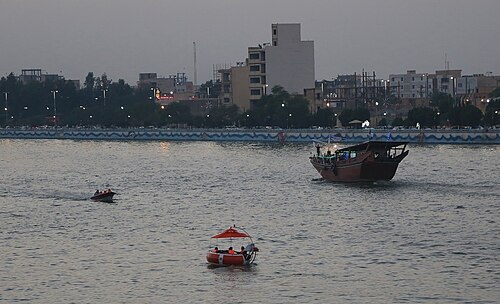
Khorramshahr is a city located in the Khuzestan province of Iran, near the confluence of the Karun River and the Shatt al-Arab, which is the waterway formed by the joining of the Euphrates and Tigris rivers. It is situated approximately 10 kilometers from the Iran-Iraq border and lies about 60 kilometers southwest of Ahvaz, the provincial capital. Established as a city in the early 20th century, Khorramshahr grew rapidly due to its strategic location and the development of its port, which facilitated trade and transportation. The city's name translates to "the city of happiness," symbolizing its vibrant history and diverse culture.
Khorramshahr played a significant role during the Iran-Iraq War (1980-1988). It was one of the first cities to be attacked by Iraqi forces, resulting in widespread destruction and a humanitarian crisis. The conflict saw extensive fighting for control of the city, leading to significant loss of life and extensive damage to its infrastructure. The city was occupied for nearly a year, from September 1980 until May 1981, when Iranian forces launched a successful operation to reclaim it. Since the war, Khorramshahr has been rebuilt, and efforts have been made to revitalize its economy, which heavily relies on the shipping industry, agriculture, and oil production. Today, it is known for its port, which is one of the largest in Iran, and is a critical link for trade with neighboring countries, as well as for serving the oil-rich region of Khuzestan.
The cultural heritage of Khorramshahr reflects a blend of various ethnic groups, including Persians and Arab communities. The city's diverse culture is showcased through its traditional festivals, cuisine, and hospitality. Several historical sites, including mosques and remnants of buildings from before the war, attract visitors and historians interested in the region's past. Despite the challenges faced during the conflict, Khorramshahr continues to rebuild and develop, symbolizing resilience and the enduring spirit of its residents. As a significant urban center in southwestern Iran, it remains an important hub for economic activity and cultural exchange in the region.
Facts about Khorramshahr
- Khorramshahr is known for its strategic location at the confluence of the Karun River and the Persian Gulf, making it a vital port city in Iran.
- The city was heavily impacted during the Iran-Iraq War, particularly during the Battle of Khorramshahr in 1980, which became symbolic of Iranian resistance.
- Khorramshahr is home to the largest shantytown in Iran, known as the 'Sudan' district, which reflects the demographic diversity and socioeconomic challenges of the region.
- The name 'Khorramshahr' translates to 'City of Joy' in Persian, highlighting its historical significance as a vibrant and culturally rich area before the war.
- Khorramshahr's Grand Mosque, also known as the Great Mosque of Khorramshahr, is an architectural landmark that has survived numerous conflicts and represents the city's resilience.
- The city's history dates back to ancient times, with influences from various civilizations, including Persian, Arab, and Ottoman, contributing to its cultural tapestry.
- Khorramshahr was temporarily occupied by Iraqi forces during the Iran-Iraq War, and its liberation became a significant event in the national narrative and commemorated in Iranian culture.
- The city hosts a diverse population, including ethnic Arabs, Persians, and other groups, contributing to its multicultural identity.
- Despite the devastation caused by the war, Khorramshahr has undergone significant reconstruction efforts, emphasizing Iran's commitment to rebuilding and revitalizing affected areas.
- Khorramshahr is also known for its rich agricultural land, particularly in date palm cultivation, which plays a significant role in the local economy.