Khulna, Bangladesh
- 1,500,689 people
- 6 places to visit
- 22.8373, 89.54
Places to Visit (6)
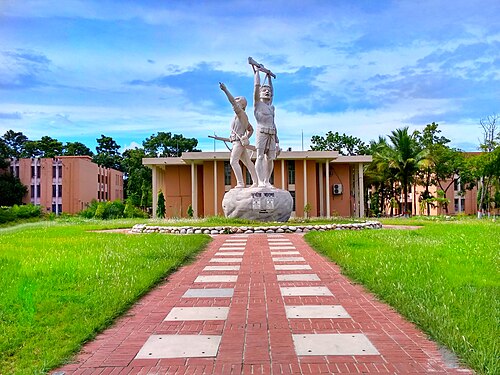
Khulna is one of Bangladesh's major cities, located in the southwestern part of the country. It serves as the administrative seat of Khulna District and is the third-largest city in Bangladesh, following Dhaka and Chittagong. With an estimated population of over 1.5 million, Khulna plays a crucial role in the nation's economy, particularly due to its strategic location near the confluence of the Ganges and Brahmaputra rivers. The city has historically been an important port, facilitating trade and commerce with both domestic and international partners. As a vibrant urban hub, Khulna is characterized by its diverse culture, with a rich history influenced by various civilizations, including the Mughals and the British.
Economically, Khulna is recognized for its industrial base, particularly in the shipbuilding, jute processing, and shrimp farming industries. The Port of Khulna is vital for the import and export of goods, enhancing the city's status as a commercial center. Furthermore, Khulna is close to the Sundarbans, the largest mangrove forest in the world and a UNESCO World Heritage site. This unique ecosystem is not only vital for biodiversity but also significantly contributes to the local economy through tourism and fisheries. The city also has a growing education sector, hosting several colleges and universities that attract students from various regions. Despite facing challenges such as urbanization and environmental issues, Khulna is a city with considerable potential, balancing its rich cultural heritage with modern development efforts.
Facts about Khulna
- Khulna is home to the Sundarbans, the largest mangrove forest in the world and a UNESCO World Heritage Site, known for its biodiversity including the Royal Bengal Tiger.
- The city is a major industrial and commercial hub in Bangladesh, particularly known for its jute processing and shipbuilding industries.
- Khulna has a strategic location near the Bay of Bengal, with the Pashur River and the Bhairab River providing vital access for trade and transportation.
- It is home to the historic 18th-century mosque, the Sixty Dome Mosque (Shat Gombuj Masjid), which is a UNESCO World Heritage Site and a masterpiece of Mughal architecture.
- Khulna was a center of the 1971 Bangladesh Liberation War, with significant battles taking place in the region that contributed to the country's independence from Pakistan.
- The Khulna Division is known for its rich cultural heritage, including traditional folk music and dance forms, notably Baul music.
- It serves as the gateway to the Sundarbans, hosting various eco-tourism initiatives and adventure activities like tiger spotting and boating tours.
- Khulna features several important educational institutions, including Khulna University and Jessore Science and Technology University, promoting higher education in the region.
- The city has a vibrant fish market, known for its diverse and fresh seafood, reflecting the local fishing industry and culinary traditions.
- Khulna is recognized for its unique handloom industry, producing traditional textiles and fabrics that are popular both locally and internationally.