Kielce, Poland
- 208,598 people
- 14 places to visit
- 50.8661, 20.6286
Places to Visit (14)
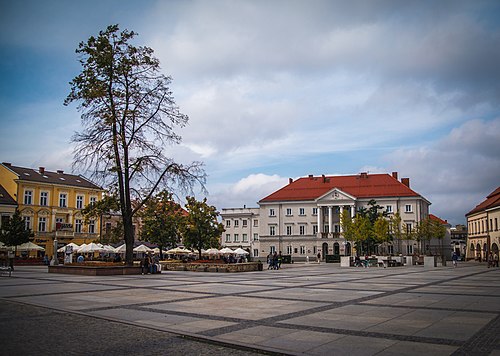
Kielce is a city located in south-central Poland, serving as the capital of the Świętokrzyskie Voivodeship. With a population of approximately 200,000 residents, it is one of the country's larger urban centers. The city is situated at the base of the Świętokrzyskie Mountains, which provides both natural beauty and numerous recreational opportunities. Kielce has a rich history that dates back to the 12th century, when it was established as a settlement. The city played a significant role in the early history of Poland, known for its proximity to the important trade routes and its strategic position.
Economically, Kielce has undergone significant transformation in recent decades. Historically centered around mining and heavy industry, the city has diversified its economy to include sectors such as technology, services, and education. Kielce hosts several institutions of higher education, including the Jan Kochanowski University, contributing to a skilled workforce and fostering innovation. The city's location as a transportation hub, with efficient road and rail connections, further enhances its economic prospects. Additionally, Kielce is known for its vibrant cultural scene, hosting various events such as the International Fair of Defense Industry and the Kielce Cultural Summer, which attract visitors from across the region and beyond.
The architecture in Kielce reflects its historical significance, with landmarks like the Kielce Cathedral, the Palace of the Kraków Bishops, and modern structures that demonstrate the city's growth and development. The city also boasts numerous parks and green spaces, including the City Park and Kielce's Botanical Garden, offering residents and tourists alike a peaceful escape from urban life. As a blend of tradition and modernity, Kielce continues to evolve, making it an important city in Poland with a promising future.
Facts about Kielce
- Kielce is known for its unique geological feature, the Kadzielnia Nature Reserve, which houses a former limestone quarry and offers stunning natural landscapes.
- The city is home to the second largest Cistercian monastery in Poland, the Świętokrzyskie Monastery, which has historical significance dating back to the 12th century.
- Kielce is famous for the historic Palace of the Kraków Bishops, which dates back to the 17th century and is a key example of Baroque architecture in the region.
- The city hosts the International Fair of Invention and New Technologies, which attracts inventors and entrepreneurs from around the world, showcasing innovation.
- Kielce played a significant role during World War II, being a center for the Polish resistance and witnessing several critical events in the region's history.
- The local Kielce Cathedral, known as the Cathedral of the Assumption of the Blessed Virgin Mary, features remarkable Rococo interiors and is an important religious site.
- Kielce is located near the Świętokrzyskie Mountains, one of the oldest mountain ranges in Europe, providing numerous opportunities for outdoor activities and tourism.
- The city proudly celebrates its annual Kielce Cultural Summer, a festival that highlights local art, music, and food, attracting visitors every year.
- Kielce has a strong tradition of education, being home to several universities and higher institutions, including the University of Technology and Humanities.
- The city is recognized for its historic railway station, which was opened in 1885, and played a key role in the development of rail transport in central Poland.