Kingston upon Hull, United Kingdom
- 314,018 people
- 16 places to visit
- 53.7675, -0.3273
Places to Visit (16)
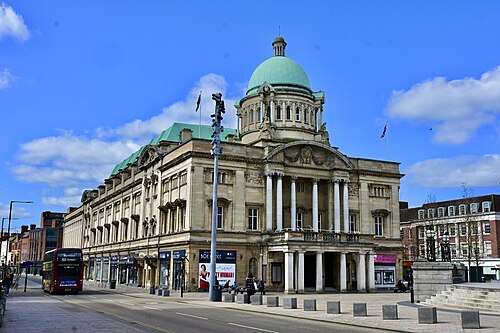
Kingston upon Hull, commonly known as Hull, is a port city located in East Yorkshire, England. Situated at the confluence of the River Hull and the Humber Estuary, Hull has a rich maritime history that dates back to its establishment in the 12th century. The city was granted its royal charter in 1299 and soon became a significant center for trade and shipping. Its strategic location facilitated the export of wool and the import of goods, contributing to its economic growth. Throughout the centuries, Hull has played various roles, notably as a pivotal naval port during both World Wars, and remains an important hub for shipping and logistics today.
Hull is also known for its cultural and educational institutions. The city is home to the University of Hull, established in 1927, which has gained recognition for its research output and diverse programs. The cultural scene is vibrant, with venues such as the Hull New Theatre and the Ferens Art Gallery, which houses a collection ranging from Old Masters to contemporary art. In 2017, Hull was designated as the UK City of Culture, a title that highlighted its commitment to arts and community engagement. The event brought a surge of artistic displays, performances, and festivals, significantly contributing to local pride and tourism. Additionally, Hull's architecture reflects its history, with landmarks like the maritime museum and the historic Old Town offering glimpses into its past.
Economically, Hull has evolved in recent years, diversifying beyond its historical reliance on shipping and fishing. The city has invested in renewable energy initiatives, particularly in wind energy, positioning itself as a leader in this growing sector. The development of the Humber Energy Estuary has attracted significant investment and created numerous jobs. Furthermore, Hull was selected to host various initiatives related to digital innovation and urban regeneration, further enhancing its reputation as a modern city. With a population of around 260,000, Hull combines historical significance with contemporary growth, making it a unique and dynamic part of the United Kingdom.
Facts about Kingston upon Hull
- Kingston upon Hull is home to the UK City of Culture 2017, celebrating its rich cultural heritage and artistic contributions.
- The city boasts the UK's largest port, handling significant cargo traffic and playing a vital role in the UK's maritime industry.
- Hull is known for its unique 'Fish Trail', a series of fish sculptures scattered throughout the city, representing its historical fishing industry.
- The Wilberforce House in Hull is the birthplace of William Wilberforce, a key figure in the movement to abolish the slave trade in the UK.
- The Ferens Art Gallery in Hull houses one of the finest collections of British and European art outside London.
- The iconic Humber Bridge, one of the longest suspension bridges in the world, offers breathtaking views and connects Hull with East Yorkshire.
- Hull's Old Town features the best-preserved Victorian architecture in the UK, showcasing a unique blend of history and urban development.
- The city was the birthplace of the first-ever Green Party in the UK, establishing Hull as a focal point for environmentalism in the 1980s.
- Every year, Hull hosts the Freedom Festival, a celebration of freedom and human rights, attracting thousands of visitors with performances and exhibitions.
- Kingston upon Hull is noted for its historical connection to prominent figures in literature, such as Philip Larkin, who served as the librarian at the University of Hull.