Kirkkonummi, Finland
- 32,920 people
- 5 places to visit
- 60.1267, 24.4411
Places to Visit (5)
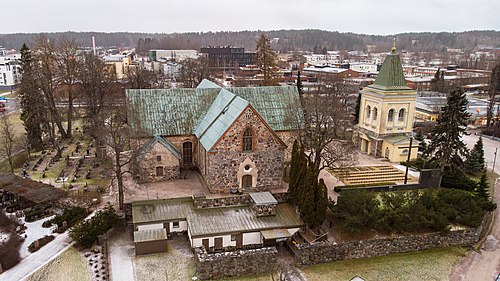
Kirkkonummi is a municipality and town located in southern Finland, approximately 25 kilometers west of the capital city, Helsinki. Situated in the Uusimaa region, it covers an area of around 1,335 square kilometers, of which a substantial portion is water. The town has a population of approximately 38,000 inhabitants, making it one of the larger municipalities in Finland by population. Kirkkonummi's geographical position places it at the juncture of the countryside and coastal regions, providing both urban amenities and opportunities for outdoor activities, including hiking, biking, and water sports along its many lakes and coastal areas.
The town has a rich history that dates back to the Middle Ages, with its name deriving from the Finnish word for "church" (kirkkko) and the Old Swedish word for "nook" (numm). Kirkkonummi was officially established as a municipality in 1867. The local economy is diverse, with a mix of manufacturing, services, and agriculture. It has also experienced significant residential development in recent years due to its proximity to Helsinki, attracting families and commuters seeking a balanced lifestyle away from the hustle and bustle of the capital. The town is well-connected by road and rail, providing easy access to Helsinki and other neighboring areas, which further enhances its appeal as a suburban living location.
Culturally, Kirkkonummi offers a blend of historical sites and modern facilities. Some notable landmarks include the medieval church of St. Lawrence, which is one of the oldest stone churches in Finland, and various museums that showcase the local heritage and arts. The municipality values education and community activities, featuring several schools and a vibrant array of sports and cultural events throughout the year. As Kirkkonummi continues to evolve and grow, it retains its charm as a peaceful and scenic destination that balances modern living with a connection to nature and history.
Facts about Kirkkonummi
- Kirkkonummi is known for its unique blend of urban and rural environments, making it a popular suburb for people working in Helsinki while still providing a connection to nature.
- The municipality was established in 1867, and its name translates to 'Church Hill,' which references the historically significant church in the area.
- Kirkkonummi has several ancient rock paintings dating back thousands of years, highlighting its rich prehistoric heritage.
- It is home to the largest golf course in Finland, the Eke Golf, which attracts golf enthusiasts from across the country.
- The city has a strong maritime culture, being located on the coast and having numerous islands, making it a hub for boat owners and maritime activities.
- Kirkkonummi hosts the annual Kirkkonummi Day, celebrating local culture, traditions, and community spirit, featuring various activities and entertainment.
- The town features the unique 'Porkkalanniemi' peninsula, which has historical significance as it was a site of Soviet military activity during the Cold War.
- One notable landmark is the Kirkkonummi Church, a wooden church completed in 1823, which showcases the neoclassical architectural style prevalent in Finland.
- The municipality is known for its strong focus on sustainability and green initiatives, including extensive public parks and nature conservation efforts.
- Kirkkonummi is a bilingual municipality with both Finnish and Swedish being official languages, reflecting the cultural diversity of the region.