Kisangani, DR Congo
- 1,181,788 people
- 4 places to visit
- 0.5185, 25.2008
Places to Visit (4)
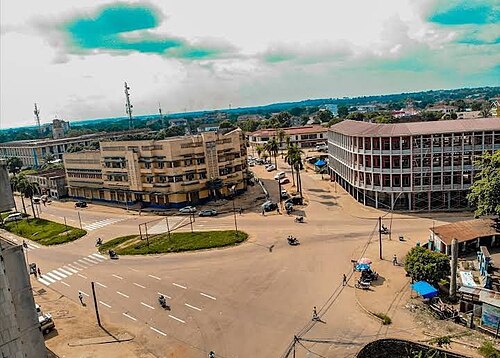
Kisangani, the third-largest city in the Democratic Republic of the Congo, is situated at the confluence of the Congo and Tshopo rivers in the northeastern part of the country. Known as Stanleyville during the colonial period, it was named after the British explorer Henry Morton Stanley, who traveled through the region in the late 19th century. As a key economic hub, Kisangani plays a vital role in the region's trade and transportation, with its strategic location enabling it to serve as a gateway to various surrounding areas. The city is approximately 1,700 kilometers from Kinshasa, the capital of the DRC, and around 350 kilometers from the Ugandan border, making it an essential link for transnational commerce.
The population of Kisangani is diverse, consisting of various ethnic groups, including the Mongo and Luba peoples. The city has experienced significant demographic changes and urbanization over the years, with the population estimated at over 1 million residents. Kisangani's economy is primarily based on agriculture and trade, with crops such as cassava, rice, and palm oil being cultivated in the surrounding rural areas. The city also has a considerable industrial presence, including the production of textiles, food processing, and timber, driven by the abundant natural resources found in the region. Despite these economic activities, Kisangani faces challenges such as infrastructure deficits, inadequate healthcare, and limited access to education, compounded by the political instability that characterizes much of the DRC.
Kisangani is home to several cultural and historical sites, including the famous Falls of Boyoma, formerly known as the Stanley Falls, which are a series of waterfalls on the Congo River. This natural attraction not only contributes to the local ecosystem but also holds cultural significance for the communities living in the area. The city is also known for its vibrant markets and lively street life, where vendors offer a variety of goods, ranging from traditional crafts to fresh produce. Despite the challenges it faces, Kisangani's rich history, cultural diversity, and potential for growth make it an important city in the broader context of the DRC's development.
Facts about Kisangani
- Kisangani is home to the famous Congo River, the second longest river in Africa, which significantly influences the city's transportation and economy.
- The city was originally named Stanleyville after the explorer Henry Morton Stanley, who visited during the late 19th century before being renamed Kisangani in 1966.
- Kisangani is known for its unique cultural diversity, with various ethnic groups such as the Ngala, Mongo, and Swahili people, contributing to a rich tapestry of traditions and languages.
- The city features the prominent Tshopo Falls, a spectacular natural landmark that attracts tourists and showcases the region's beauty.
- Kisangani is an important economic hub in the DR Congo, with a central location that facilitates trade between different regions and neighboring countries.
- The city has a significant historical role as a center for the rubber trade in the late 19th and early 20th centuries, impacting its economic development.
- Kisangani is the site of the former University of Kisangani, which is one of the leading higher education institutions in the eastern part of the DR Congo.
- The city's climate is classified as tropical humid, featuring both wet and dry seasons, which supports a rich biodiversity in the surrounding areas.
- Kisangani hosts several local festivals that celebrate the cultural heritage of its diverse population, making it a vibrant center for artistic expression.
- The city played a pivotal role during the Second Congo War (1998-2003), which has shaped its social and political landscape in the years since.