Kleve, Germany
- 49,072 people
- 13 places to visit
- 51.7867, 6.1295
Places to Visit (13)
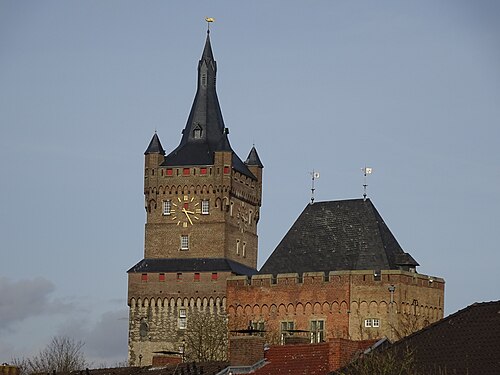
Kleve, located in North Rhine-Westphalia, Germany, is a city with a rich historical heritage and picturesque landscapes. Situated along the banks of the Rhine River, it borders the Netherlands and serves as an important cultural and economic center in the region. The city has a population of around 50,000 inhabitants and is characterized by its charming blend of historical architecture and modern amenities. Kleve is particularly renowned for its beautiful parks and gardens, including the Schwanenburg Castle Park, which enhances its scenic quality and provides residents and visitors with leisurely spaces for recreation and relaxation. The historical significance of Kleve is evident in its many monuments and museums, such as the Museum Kurhaus Kleve, which showcases a variety of art exhibitions.
Founded in the early Middle Ages, Kleve has been shaped by its strategic importance and political significance throughout its history. The city served as the capital of the Duchy of Cleves, which thrived during the Renaissance and played a vital role in European politics. The iconic Schwanenburg, a castle dating back to the 12th century, stands as a testament to Kleve's medieval past and offers stunning views of the surrounding area. The city's architecture reflects its historical evolution, featuring a mix of Gothic, Baroque, and modern styles. Kleve is also home to various cultural events, including the Klever Frühling (Kleve Spring Festival) and seasonal markets, which highlight local traditions and foster community spirit. In addition to its cultural offerings, the city boasts a diverse economy, with industries ranging from trade and manufacturing to healthcare and education.
Overall, Kleve is a vibrant city that successfully balances its historical legacy with contemporary life, making it an attractive destination for both tourists and residents. Its strategic location near the Dutch border enhances cultural exchange and economic opportunities. With its abundance of green spaces, cultural attractions, and rich history, Kleve presents a unique charm and character that reflects both its past and present. As a city that honors its historical roots while embracing modernity, Kleve continues to thrive as a community that welcomes visitors and fosters a sense of belonging among its inhabitants.
Facts about Kleve
- Kleve is known for its rich history as a fortified town, with remnants of its medieval walls still visible today.
- The city is home to the stunning 'Schloss Moyland', a neo-Gothic castle that houses a museum featuring modern art, including works by Joseph Beuys.
- Kleve has been historically significant in the context of the Peace of Kleve, which took place in 1666, marking a resolution in the Franco-Dutch War.
- The city's botanical gardens, 'Botanischer Garten Kleve', are renowned for their extensive collection of exotic plants and beautiful landscaped designs.
- Kleve is part of the Lower Rhine region and hosts the annual 'Kleve Carnival,' one of the largest and most colorful carnival celebrations in Germany.
- The town played a crucial role in World War II, being significant due to its strategic location and later became a site for several military operations.
- Kleve is often referred to as the 'City of Roses' due to its long-standing tradition of rose cultivation and the annual Rose Festival.
- The region around Kleve has been linked with the famous artist Caspar David Friedrich, who often painted landscapes inspired by the local scenery.
- Kleve has a unique feature in the form of the 'Humbert's House,' which is a well-preserved example of medieval architecture dating back to the 14th century.
- With proximity to the Netherlands, Kleve boasts a bilingual culture, where German and Dutch influences are seen in the local cuisine, language, and customs.