Koblenz, Germany
- 107,319 people
- 16 places to visit
- 50.3569, 7.589
Places to Visit (16)
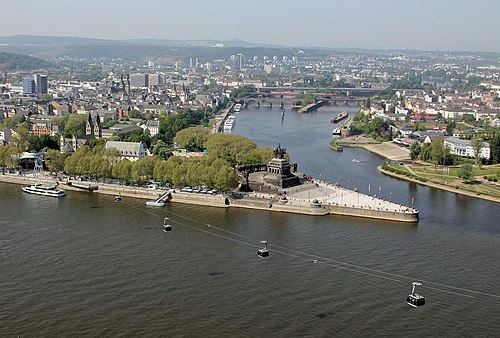
Koblenz is a historical city located in the west of Germany, positioned at the confluence of the Rhine and Moselle rivers. With a population of approximately 113,000, it serves as a significant cultural and economic center in the Rhineland-Palatinate region. The city boasts a rich history dating back over 2,000 years, originally established by the Romans as "Confluentes." This strategic location at the junction of two major rivers facilitated trade and military advantages, making Koblenz a key site throughout various historical periods, including the Holy Roman Empire and later Prussian control.
The city is renowned for its picturesque landscapes, complemented by numerous historical landmarks. One of the most prominent attractions in Koblenz is the Deutsches Eck (German Corner), where the Rhine and Moselle meet. Here, visitors can see a large equestrian statue of Emperor William I, symbolizing German unity. The nearby Ehrenbreitstein Fortress, perched high above the Rhine on the opposite bank, offers stunning views of the city and is accessible via a cable car, making it a popular tourist destination. Koblenz is also known for its well-preserved medieval architecture, including the Church of St. Castor and the historic Alte Burg, which date back to the 9th and 13th centuries, respectively.
Culturally, Koblenz hosts a variety of events and festivals, celebrating its heritage and vibrant community life. The city is part of the Rhine Valley, a UNESCO World Heritage Site, which attracts tourists with its scenic vineyards and charming towns. In addition, Koblenz serves as a gateway to exploring the Rhine and Moselle wine regions, famous for producing high-quality wines. Its strategic location allows for easy transportation connections, making it a hub for both regional and international travel. Overall, Koblenz blends rich history, cultural vibrancy, and natural beauty, making it an appealing destination for visitors and an important city in Germany’s landscape.
Facts about Koblenz
- Koblenz is situated at the confluence of the Rhine and Moselle rivers, making it a vital trade and transportation hub in Germany.
- The city is home to the iconic Deutsches Eck, which is a famous landmark featuring a statue of Emperor William I, symbolizing the unity of Germany.
- Koblenz has a rich history dating back over 2,000 years, being founded as a Roman settlement known as 'Confluentes' around 9 BC.
- The Ehrenbreitstein Fortress, located across the Rhine from Koblenz, is one of the largest preserved fortresses in Europe and offers panoramic views of the city.
- In 2011, Koblenz was designated a UNESCO World Heritage site as part of the Upper Middle Rhine Valley, recognized for its outstanding cultural landscape.
- Koblenz hosts the annual Rhine in Flames festival, a spectacular event featuring fireworks and illuminated ships on the Rhine River.
- The city is known for its cable car, which connects to the Ehrenbreitstein Fortress and is one of the longest in the world, providing stunning views over the rivers.
- Koblenz was heavily influenced by both French and Prussian governance, resulting in a unique blend of architectural styles and cultural influences.
- The city has a vibrant wine culture, particularly known for Mosel wines, which are produced in the surrounding vineyards along the Moselle River.
- Koblenz is also recognized for its role in modern German history, especially as the site of the signing of the Treaty of Versailles’ repercussions on the region in 1919.